
House Training a Puppy: A Practical Guide
Less mess, less stress — and a puppy who knows where to go
House training a puppy takes patience, consistency and a good routine. I’ll show you how to work with your puppy’s natural schedule, prevent those little accidents and make the whole process easier for both of you.
Start With a Plan
The secret to house training a puppy is being one step ahead of them. Puppies don’t automatically know that the lawn is their bathroom and your carpet isn’t — we have to teach them!
The basic idea is simple: learn when your puppy is likely to need to go, get them to the right place beforehand, and reward them when they get it right. In between potty trips, keep a close eye on them so they don’t have too many opportunities to make mistakes indoors.
And don’t worry if there are a few puddles along the way. There probably will be. House training is much easier when you stop expecting perfection and start learning your own puppy’s routine.
Learn Your Puppy's Potty Schedule
The key to house training a puppy is learning when your pup is likely to pee or poop. It may feel as though little puppies go whenever and wherever they please (boy, does it feel like that!), but if you can work out when your puppy is likely to need to go, you’ve just got to get them to the right place… beforehand!
In other words, you’re potty training your puppy proactively instead of reactively.
There are certain times when it’s a good idea to head straight outside:
After waking up — including first thing in the morning and after naps.
After eating or drinking — puppies often need a potty break soon afterwards.
After playing or getting excited — activity can be another trigger.
Before bedtime — always give your puppy one last opportunity to go.
Whenever you spot the signs — sniffing, circling, becoming restless or suddenly wandering away can mean it’s time to move fast.
These are guidelines, though, because every puppy is different. Figuring out your own puppy’s schedule is what really makes this easier.
The simplest way I’ve found to do that is to keep a little journal. Write down every time your puppy pees or poops, along with when they eat, drink, sleep and play. Before long, you’ll probably start seeing a pattern — and once you know the pattern, it’s much easier to be waiting by the door rather than reaching for the carpet cleaner!
How Long Can a Puppy Hold Their Bladder?
How long a puppy can hold their bladder depends partly on their age, but don’t mistake a theoretical maximum for a potty-training schedule!
You may have heard the rule that a puppy can hold their bladder for roughly one hour for every month of age, while some guidance allows an additional hour. Either way, it’s only a rough rule of thumb, and individual puppies vary.
In my experience, an 8-week-old puppy who’s awake, playing, eating and drinking usually needs to go out much more often than once every two or three hours. And that’s the important bit when you’re house training: don’t wait until your puppy has reached their limit.
| Puppy Age | Rough Maximum Between Potty Breaks* |
|---|---|
| 8 weeks (2 months) | About 2–3 hours |
| 12 weeks (3 months) | About 3–4 hours |
| 16 weeks (4 months) | About 4–5 hours |
*Important: These are rough maximums, not a recommended daytime potty schedule. Young, active puppies often need to go outside much more frequently.
Don't Aim for the Maximum
When you’re actively house training, give your puppy plenty of opportunities to get it right rather than seeing how long they can hold on.
For a very young puppy, that can mean going outside surprisingly often while they’re awake — especially after sleeping, eating, drinking or playing. As your puppy gets older and you get to know their individual pattern, you’ll gradually be able to increase the time between potty trips.
Remember, too, that circumstances matter. A puppy who’s been drinking more than usual, playing hard or getting excited may need to go sooner.
Think of the age guideline as a limit, not a target. Your puppy’s own behavior and routine are much more useful than watching the clock.
How to House Train a Puppy Step by Step
Once you’re starting to recognize your puppy’s schedule, the actual training process is pretty straightforward. Your job is to get them to the right place at the right time, reward them when they get it right, and prevent as many opportunities for mistakes as you reasonably can.
Here’s how I do it.
1. Choose a Potty Spot
Pick a specific area you want your puppy to use as their bathroom and take them to that same spot each time.
If you’re using an area of your yard, keep it fairly quiet and boring. Lots of activity, interesting smells and people wandering around can turn a quick potty trip into playtime!
And here’s one of those little things I’ve learned along the way: keep the grass fairly short. It may sound a bit fussy, but you’d be surprised how many puppies — and adult dogs — don’t like peeing or pooping in long grass.
2. Take Your Puppy Out at the Right Times
Use the schedule you’ve started learning rather than waiting for your puppy to have an accident.
Take them to their potty spot after waking, after meals and drinks, after active play, before bed and whenever you notice those telltale signs that they need to go.
For young puppies, that can mean a lot of trips outside. It’s tedious, I know, but every successful trip gives your puppy another chance to learn exactly what you want them to do.
3. Keep Potty Trips Boring Until They Go
Once you’re outside, give your puppy a chance to sniff around their potty area, but don’t immediately turn the trip into playtime.
Wait quietly and give them a chance to get down to business. Keeping potty time separate from playtime helps your puppy understand why you’ve brought them outside.
4. Reward Them Immediately
As soon as your puppy finishes peeing or pooping in the right place, let them know they’ve done something wonderful!
Praise them enthusiastically and give them a small, high-value treat right there, rather than waiting until you’re back inside.
Timing matters. You want your puppy to connect the reward with going potty outside — not with walking back through the kitchen door.
5. Add a Potty Cue
You can also pair going to the bathroom with a simple word or phrase. I’ve used “wee-wee” for a pee and “go sniff” for a poop.
At first, only say the cue as your puppy is actually doing it, then praise and reward them. Once you’re sure they’ve made the connection, you can start using the cue when you reach their potty spot.
One mistake I’ve seen new puppy owners make is using the cue too soon — standing outside repeating it over and over before the puppy has any idea what it means. Apart from diluting the word, you could accidentally teach them that “wee-wee” means wander around, sniff everything and have a lovely time!
Let the action teach the meaning first. Then start asking for it.
6. Supervise Between Potty Trips
Until your puppy is reliably house trained, don’t give them more freedom around the house than they can handle.
When they’re loose indoors, keep a close eye on them so you can spot the signs that they need to go and get them outside quickly. If you can’t supervise them, use an appropriate safe confinement area or crate if you’re crate training.
As your puppy becomes more reliable, you can gradually give them more freedom. Think of it as something they earn as their potty habits improve.
What to Do When Your Puppy Has an Accident
Let’s assume your puppy is going to have a few accidents indoors. It isn’t the end of the world, and it certainly doesn’t mean you’re going to end up with an adult dog who thinks your carpet is a bathroom.
If you find an accident after it’s happened, just clean it up. There’s nothing useful you can teach your puppy about something they did five minutes ago.
If you catch your puppy just as they’re about to go, calmly get them outside as quickly as you can. But don’t shout, punish them or make a big fuss. You don’t want your puppy learning that peeing or pooping in front of you is bad — because that’s going to make potty trips together rather difficult!
Then think about why the accident happened. Did you miss one of their signals? Had it been too long since the last potty trip? Did they just wake up or finish playing?
An accident is useful information. Adjust the timing or supervision and try again.
Clean the Area Thoroughly
Clean accidents thoroughly with a pet-safe enzymatic cleaner designed for urine and other pet stains. These cleaners help remove the odor left behind rather than simply making the area smell clean to us.
That’s important because your puppy’s nose is considerably better than yours! If they can still smell where they’ve been before, that spot may become rather tempting the next time they need to go.
Accidents suddenly getting worse?
A few mistakes are normal while your puppy is learning. But if a previously reliable puppy suddenly starts having accidents, is urinating unusually often, seems uncomfortable or strains to pee, talk to your vet rather than assuming it’s simply a training problem.
House Training Your Puppy at Night
Nighttime can be a little different because very young puppies may simply not be able to make it all the way through until morning. Some will start sleeping through surprisingly quickly; others will need a nighttime potty trip for a while.
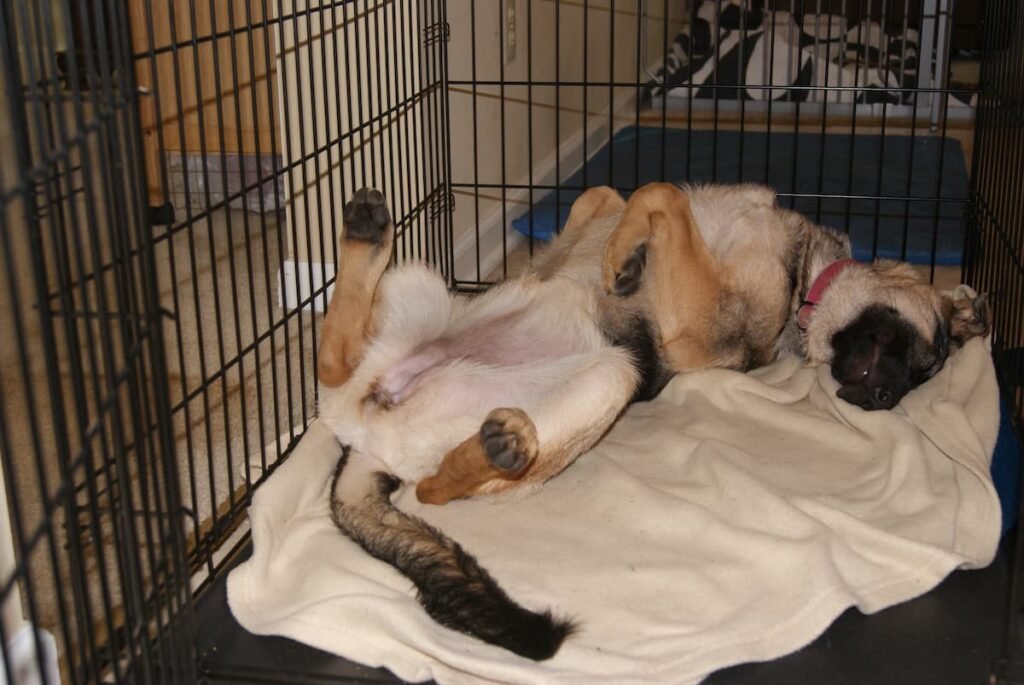
If you’re crate training, keep your puppy’s crate close enough to your bed that you’ll hear them if they wake and need to go. A puppy who suddenly becomes restless, whines or wakes during the night may be telling you it’s potty time.
If that happens, get moving quickly. I used to carry my puppies outside for nighttime potty trips rather than risk a puddle halfway to the door.
And keep the whole trip wonderfully boring! No games, no wandering around the garden and no middle-of-the-night party. Take your puppy to their potty spot, quietly praise and reward them when they go, then it’s straight back to bed.
What About Water Before Bed?
I wouldn’t use a fixed rule such as taking every puppy’s water bowl away at 7 p.m. Your puppy’s age, activity, the weather and what time you actually go to bed all make a difference.
The important thing is to build the final potty trip into your puppy’s bedtime routine and make sure they have an opportunity to go immediately before settling down for the night.
And don’t restrict water simply to avoid accidents. If your puppy seems unusually thirsty or is suddenly drinking and urinating much more than normal, that’s something to discuss with your vet rather than trying to solve it by limiting their water.
House Training a Puppy in Winter
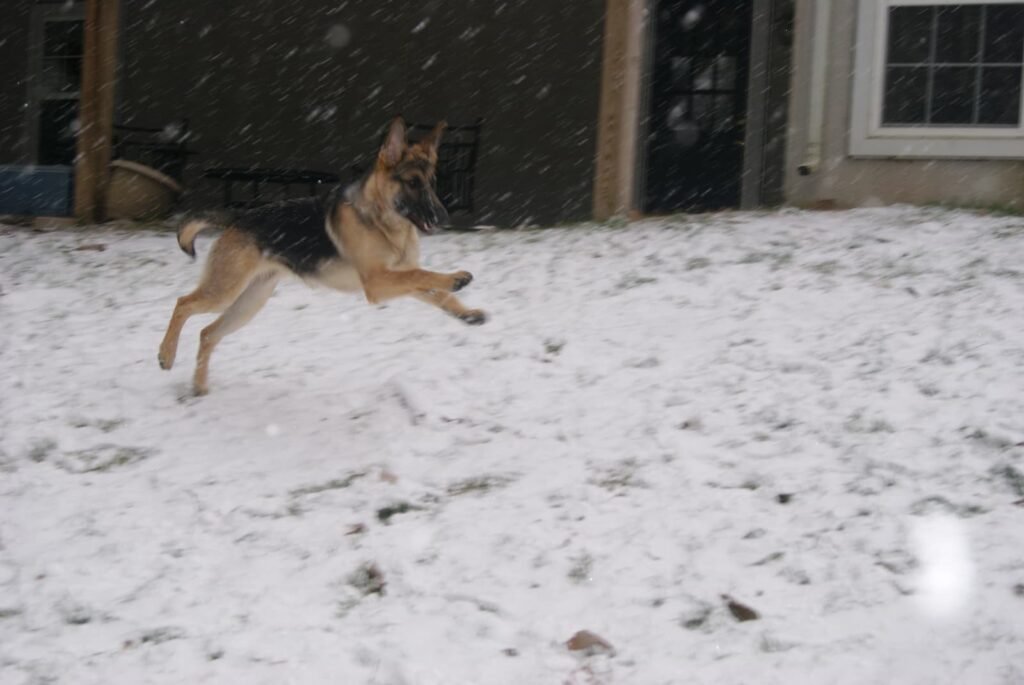
I’ve house trained puppies during some pretty cold Pennsylvania winters, and I can tell you that snow adds a whole new dimension to the process!
Some puppies love it. Instead of concentrating on why you’ve brought them outside, they’re far more interested in bouncing through the snow, digging in it or trying to eat it. Others take one look at the cold, wet ground and would much rather head straight back indoors.
Either way, the basic house-training method stays the same: take your puppy to their usual potty area, keep the trip focused, and praise and reward them as soon as they go.
If there’s deep snow on the ground, clear a small potty area and a path to it. That gives your puppy somewhere familiar and accessible to go and saves you both from wading around looking for the perfect patch of ground.
And yes, this can mean standing outside in freezing weather waiting for a puppy who has apparently forgotten why you’re there. Keep at it! The more consistent you are, the easier it is for your puppy to understand that snow on the ground doesn’t change the rules.
What About Water Before Bed?
I wouldn’t use a fixed rule such as taking every puppy’s water bowl away at 7 p.m. Your puppy’s age, activity, the weather and what time you actually go to bed all make a difference.
The important thing is to build the final potty trip into your puppy’s bedtime routine and make sure they have an opportunity to go immediately before settling down for the night.
And don’t restrict water simply to avoid accidents. If your puppy seems unusually thirsty or is suddenly drinking and urinating much more than normal, that’s something to discuss with your vet rather than trying to solve it by limiting their water.
When Things Don't Go Quite to Plan
Even with a good routine, there will be times when your puppy doesn’t quite follow the plan. That’s normal. Before deciding that house training isn’t working, look at what happened and decide what to do next.
Your puppy doesn’t go when you take them outside: Give them a reasonable chance, then bring them back indoors and keep them under close supervision. Try again shortly afterwards rather than giving them free run of the house — that’s often when the puddle appears!
Your puppy starts sniffing, circling or wandering away: Don’t wait to see what happens. Those can be signs that they’re looking for somewhere to go, so take them straight outside.
Your puppy has an accident: Stay calm, clean it thoroughly and think about whether you missed a potty trip or gave them a little too much freedom. Then get straight back to your routine.
Your puppy gets it right: Praise and reward them immediately, then they can enjoy some supervised freedom. Every success helps reinforce what you want them to do.
If you’ve been following a consistent routine and you’re still dealing with repeated accidents or something just doesn’t seem to be clicking, that’s a little different. I’ve put together separate advice on what to do when puppy house training isn’t working, including common problems and how to get things back on track.
A Few Final House Training Tips
House training really does come down to being consistent and giving your puppy plenty of chances to get it right. Before you go, here are the things I’d most like you to remember:
Learn your puppy’s routine. General schedules are useful, but your own puppy will tell you far more if you pay attention.
Don’t wait until they’re desperate. Take them out after sleeping, eating, drinking and playing, and whenever you spot the signs.
Supervise closely indoors. Too much freedom too soon makes accidents much more likely.
Reward success straight away. Make it very clear when your puppy has got it right.
Don’t punish accidents. Clean them up, think about what you might have missed, and adjust your routine.
Expect progress, not perfection. Some puppies catch on quickly and others take longer.
Most of all, be patient — with your puppy and with yourself. There will probably be a few puddles, some interrupted nights and at least one occasion when you stand outside forever only for your puppy to come indoors and immediately pee on the floor!
But every time you get them outside at the right moment and reward them for getting it right, you’re helping that little light bulb come on.
Be consistent, keep watching your puppy, and you’ll get there together.
Working on more than just house training? Visit our puppy training guide for help with the other important lessons your puppy needs to learn.