
Yeast Infection in Dogs
Is your dog constantly itching, licking their paws or shaking their head? Yeast could be the culprit. Here’s how to recognize the signs, why yeast can get out of control, how your vet can confirm it, and what really helps stop it from coming back.

What Is a Yeast Infection in Dogs?
Malassezia pachydermatis is a type of yeast that normally lives on your dog’s skin and in their ears. In small amounts, it usually causes no problems at all. Trouble starts when conditions allow the yeast to multiply and trigger inflammation — what’s known as Malassezia dermatitis, yeast dermatitis or, more simply, a yeast infection.
Yeast tends to cause problems in warm, moist areas, so you’ll often see it affecting the paws, ears, armpits, groin, jowls and skin folds.
But there’s an important question to ask: why did the yeast get out of control in the first place?
Yeast infections often happen because something else has changed the skin environment and given the yeast a chance to get out of control. That’s especially worth thinking about if you treat the infection, everything settles down — and then it comes right back again.
There’s another possibility, too. Some dogs can become hypersensitive to Malassezia and react to even small amounts of yeast. My dog Ava is one of them — and it took us four years to discover that yeast hypersensitivity was behind her relentless itching.
I’ll come back to Ava’s story later because what finally helped us get to the bottom of her problem is particularly relevant if your dog suffers from recurring yeast issues.
Signs and Symptoms of Yeast Infection in Dogs
Yeast infections can be seriously itchy. Depending on where the problem is, you might notice your dog licking and chewing their paws, scratching at their skin or shaking their head because their ears are driving them crazy.
Common signs to watch for
- Lots of itching and scratching
- Licking, biting or chewing the paws
- Red or inflamed skin
- A strong, musty or pungent smell
- Greasy, flaky or crusty skin
- Hair loss
- Darkened, thickened or leathery-looking skin in chronic cases
- Rust-colored staining on fur that’s repeatedly licked
- Head shaking or scratching at the ears
- Ear discharge
These signs can certainly make you suspect yeast, but it’s difficult to know for sure just by looking. Allergies, bacterial infections and other skin or ear problems can look surprisingly similar, so we’ll look at how vets confirm yeast a little further down the page.
Yeast Infection on Dogs' Paws
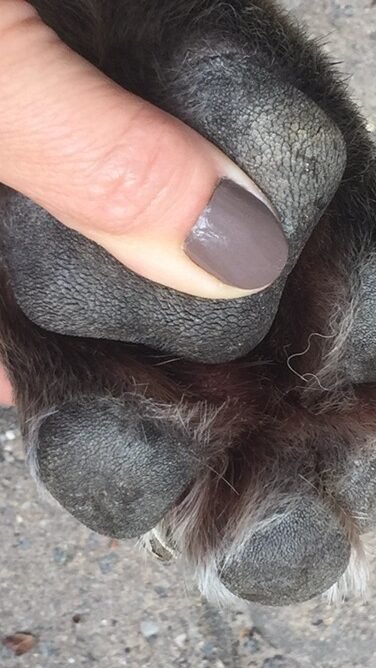
Paws are a common trouble spot. Dogs with yeast affecting their feet may lick, bite and chew them repeatedly, particularly between the toes.
All that licking can stain light-colored fur a rusty brown, and you may notice redness and inflammation between the toes or around the nail beds. There may also be a distinctive odor.
What I noticed with Ava: Smell was often a bigger clue than appearance. Her feet could also become red and sore from all the biting and chewing.
Yeast Infection in Dogs' Ears
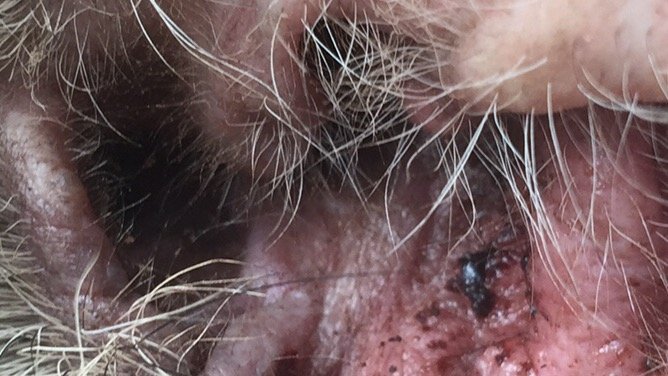
If the ears are affected, your dog may scratch them frequently, shake their head or rub their ears because they’re uncomfortable.
You may also notice redness, odor or discharge. But don’t rely on the smell or appearance alone to decide it’s yeast — ear problems can have several causes, and sometimes more than one problem is present at the same time.
Yeast Infection on a Dog's Skin
Yeast dermatitis can affect areas such as the armpits, groin, jowls and skin folds as well as other parts of the body.
The skin may be itchy, red, greasy, flaky or crusty. With a long-standing problem, it can become darker, thicker and leathery-looking, and some dogs develop areas of hair loss.
How Is a Yeast Infection in Dogs Diagnosed?
Itching, smelly paws, irritated ears and red skin can all point towards yeast, but they aren’t enough to diagnose it. Other skin and ear problems can cause very similar symptoms, which is why getting a proper diagnosis matters — particularly if the problem keeps coming back.
Your vet will start by examining your dog’s skin, paws or ears and looking at the pattern of symptoms. They may also take a small sample from the affected area and look at it under a microscope. This is called cytology, and it helps them see how much yeast is present and whether other organisms, such as bacteria, are there too.
Because Malassezia can normally live on a dog’s skin, simply finding some yeast doesn’t automatically mean it’s causing the problem. Your vet will interpret what they find alongside your dog’s symptoms and examination.
And if yeast infections keep returning, diagnosis shouldn’t necessarily stop at finding the yeast. Your vet may also need to investigate why conditions are allowing it to repeatedly cause trouble — something we’ll look at next.
What Causes Yeast Infections in Dogs?
Remember, Malassezia normally lives on your dog’s skin. So the more useful question isn’t really “Where did my dog pick up yeast?” but “What changed to allow the yeast to cause trouble?”
Yeast infections often develop because another problem has changed what’s happening on the skin or inside the ears, giving Malassezia the chance to multiply.
One of the most common underlying problems is allergic skin disease. Dogs with allergies already have inflamed, itchy skin and a disrupted skin barrier, which can make secondary yeast problems more likely.
Yeast is just one of several problems that can affect your dog’s skin. You can find an overview of other common issues on my Dog Skin Conditions page.
Other factors can also make some dogs more susceptible, including:
Skin folds and areas where moisture is easily trapped
Oily or abnormal skin conditions
Some hormonal or endocrine disorders
Certain medications or illnesses that suppress the immune system
Sometimes more than one factor is involved.
This is why repeatedly treating the yeast without asking why it keeps coming back can become a frustrating cycle. If your dog has recurring infections, finding and managing the underlying problem can be just as important as treating the yeast itself.
Can Food Cause Yeast Infections in Dogs?
You’ll often hear that carbohydrates and sugar in dog food “feed yeast” and that the answer is to put your dog on a low-carb or yeast-free diet to starve it.
It’s not quite that simple.
Malassezia lives on the skin, and there’s no good evidence that simply removing carbohydrates from your dog’s diet will starve a yeast infection on the skin or in the ears.
Food can matter, though — just for a different reason.
If your dog is allergic or sensitive to something in their food, that can contribute to itchy, inflamed skin. And as we’ve already seen, allergic skin disease can create conditions that make secondary yeast problems more likely.
So if your vet suspects food is contributing to recurring skin or ear problems, they may recommend investigating a possible food allergy. That’s very different from simply switching to an “anti-yeast” diet.
The important thing is to identify what’s driving your dog’s skin problems rather than assuming carbohydrates are feeding the yeast.
Treatment for a Yeast Infection in Dogs
Once your vet has confirmed yeast is part of the problem, treatment depends on where the infection is, how widespread or severe it is, and what’s allowing the yeast to cause trouble in the first place.
There’s rarely a one-size-fits-all answer. What works for a small patch of affected skin may be very different from what’s needed when yeast is widespread or your dog keeps getting ear infections.
Topical Treatment for Yeast Infections
For yeast affecting the skin, topical treatment is often an important part of getting the infection under control. Your vet may recommend a medicated shampoo, mousse, wipe, spray or other topical product containing an antiseptic or antifungal ingredient.
Depending on what your dog needs, your vet may recommend products containing ingredients such as chlorhexidine or an antifungal such as miconazole.
How often a product needs to be used — and how long it needs to remain in contact with the skin — varies, so follow the directions for the particular treatment your vet recommends rather than assuming all antifungal shampoos work the same way.
Paws, skin folds and other localized areas may sometimes be treated differently from a widespread skin infection. Your vet can help you choose something appropriate for the area you’re treating, particularly somewhere your dog is likely to lick.
When Are Oral Antifungal Medications Used?
If the infection is severe, widespread or isn’t responding adequately to topical treatment, your vet may prescribe an oral antifungal medication.
These aren’t medications I’d try to choose or dose yourself. Your vet will decide whether systemic treatment is appropriate for your dog and may need to consider other health conditions, medications and monitoring during treatment.
Treating the Yeast Is Only Part of the Job
Getting the yeast under control can bring enormous relief to an itchy dog — but if something else created the conditions for it to flourish, treating the infection alone may not solve the problem for long.
That’s why it’s so important to look for allergies or other underlying problems, particularly when your dog goes through the same cycle again and again.
Treat the infection — but if it keeps coming back, find out why it keeps coming back.
Why Does My Dog's Yeast Infection Keep Coming Back?
If you’ve treated your dog’s yeast infection only to find yourself dealing with the same itchy paws, skin or ears again a few weeks or months later, it’s time to look beyond the yeast itself.
As we’ve already seen, recurring yeast problems can be a sign that something else is driving them. And sometimes, figuring out exactly what that is takes a bit of detective work.
When Yeast Overgrowth Isn’t the Whole Story: Ava’s Experience
This is where my experience with Ava was a little different.
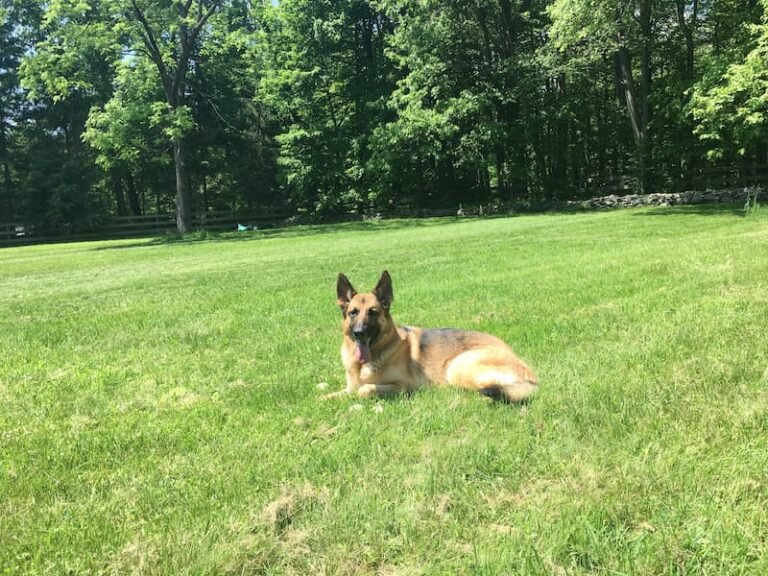
Ava suffered with terribly itchy ears and paws for years. My vet treated the yeast with medication, ear cleaning and ear drops, but sooner or later the problems would come back. Some of the medication also gave Ava side effects, mainly diarrhea, so it wasn’t working particularly well for her.
Eventually, my vet suggested that we’d reached the point where a specialist would be better able to get to the bottom of what was going on. She referred us to an allergy clinic, and I agreed it was time to try a different approach.
Allergy testing showed that Ava had multiple allergies, including a hypersensitivity to Malassezia yeast.
The specialist explained something that finally made sense of what we’d been seeing. Most dogs naturally have some yeast on their skin without it causing a problem. But because Ava was hypersensitive to Malassezia, even a tiny amount could trigger her itching. She didn’t need to have a major yeast overgrowth to be miserable.
Following the testing, the allergy clinic developed allergen-specific immunotherapy specifically for Ava. Her injections contained a personalized mixture of the allergens identified through her testing — including Malassezia — with the aim of gradually reducing her immune system’s overreaction to them.
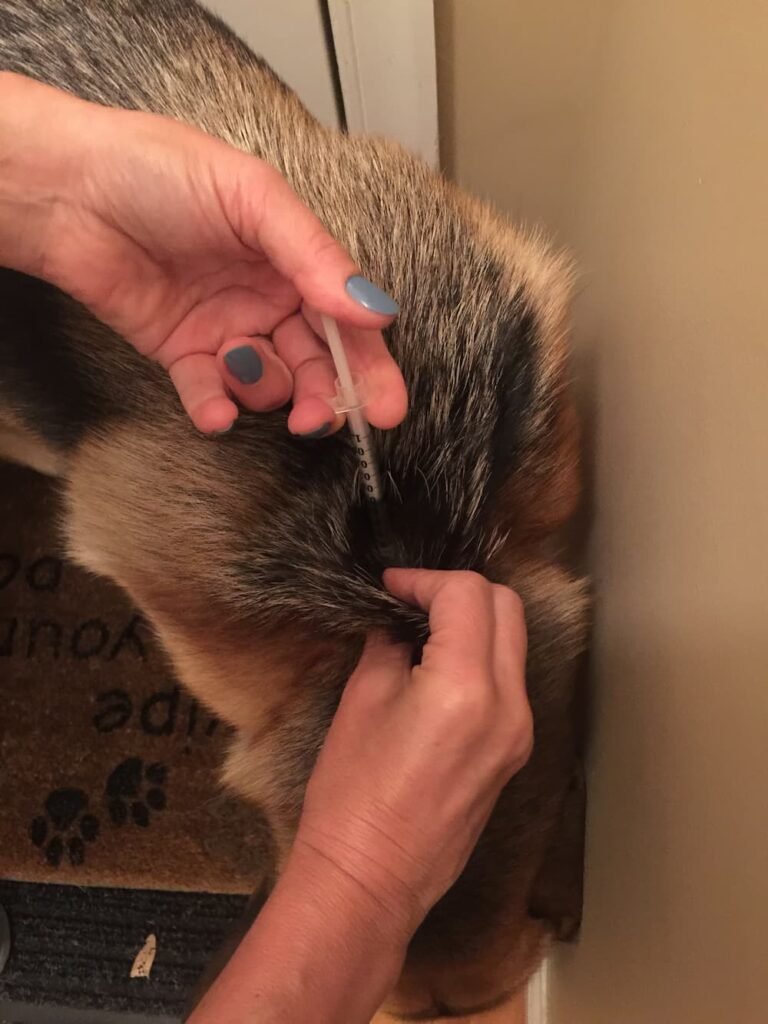
It wasn’t a quick fix. It took around a year before the immunotherapy was fully effective, but it eventually gave Ava a lot of relief.
I’ve shared Ava’s allergy testing results and more of what we went through on my dog skin allergies page.
For me, the biggest lesson was that persistent itching isn’t always as simple as repeatedly treating what’s visible on the skin, paws or ears. Sometimes, when a problem keeps coming back despite treatment, you have to keep digging to find out what’s actually driving it.
What About Yeast Infections in Dogs' Ears?
The ears are a common place for dogs to develop yeast problems, particularly when allergies or other underlying issues are affecting the ear canal.
If your dog is scratching their ears, shaking their head or has redness, odor or discharge, it’s tempting to assume yeast is responsible — especially if they’ve had a yeast infection before. But those signs aren’t specific to yeast.
Ear infections can involve yeast, bacteria or sometimes a combination of problems. So before reaching for an old bottle of ear drops and assuming it’s another yeast flare-up, it’s worth having your vet check what’s actually going on.
This is particularly important when ear problems keep coming back. Recurrent ear infections may be another clue that there’s an underlying issue, such as allergic skin disease, that needs investigating as well as treating the immediate infection.
I’ve covered dog ear infections in more detail separately, including the signs to watch for and what may be causing them.
Is a Yeast Infection in Dogs Contagious?
A typical Malassezia yeast infection isn’t considered contagious. Remember, Malassezia normally lives on dogs’ skin — the problem occurs when it overgrows or triggers inflammation in a susceptible dog.
So you don’t generally need to worry about your dog passing their yeast infection to another dog or to you.
That’s different from ringworm, which despite its name is a fungal infection rather than a worm and can spread between animals and people. This is another reason it’s worth getting unusual or persistent skin problems properly diagnosed rather than assuming they’re yeast.
The Bottom Line on Yeast Infections in Dogs
Yeast infections can make a dog absolutely miserable. The itching, paw chewing, sore ears and irritated skin are hard for them to live with — and pretty miserable for you to watch too.
The good news is that yeast can be treated. The important part is making sure that’s actually what you’re dealing with, then finding the right treatment for your dog.
And if the yeast keeps coming back, don’t just resign yourself to another round of the same thing. Recurring infections can be a sign that something else is contributing to the problem, and that’s when it’s worth asking your vet whether you need to look a little deeper.
That’s what eventually made the difference for Ava. Her problems weren’t simply about having too much yeast — her allergies, including her hypersensitivity to Malassezia, were an important part of the picture.
Treat the yeast, certainly. But when it keeps coming back, find out why.
References
Bond R, Morris DO, Guillot J, et al. Biology, diagnosis and treatment of Malassezia dermatitis in dogs and cats: Clinical Consensus Guidelines of the World Association for Veterinary Dermatology. Veterinary Dermatology. 2020;31(1):28–74.
https://pubmed.ncbi.nlm.nih.gov/31957204/
Hobi S, Bęczkowski PM, Mueller R, Tse M, Barrs VR. Malassezia dermatitis in dogs and cats. The Veterinary Journal. 2024;304:106084.
https://pubmed.ncbi.nlm.nih.gov/38431127/
Negre A, Bensignor E, Guillot J. Evidence-based veterinary dermatology: a systematic review of interventions for Malassezia dermatitis in dogs. Veterinary Dermatology. 2009;20(1):1–12.
https://pubmed.ncbi.nlm.nih.gov/19152584/
Moriello KA, Coyner K, Paterson S, Mignon B. Diagnosis and treatment of dermatophytosis in dogs and cats: Clinical Consensus Guidelines of the World Association for Veterinary Dermatology. Veterinary Dermatology. 2017;28(3):266-e68.
https://pubmed.ncbi.nlm.nih.gov/28516493/