
Dog Teeth Care Made Simple
A simple home routine can make a big difference
Brushing your dog’s teeth may not be their idea of fun (or yours!), but it’s one of the best things you can do to keep their teeth and gums healthy. I’ll show you how to make it easier, what else can help, and the warning signs that mean it’s time to call your vet.
The Best Way to Care for Your Dog’s Teeth
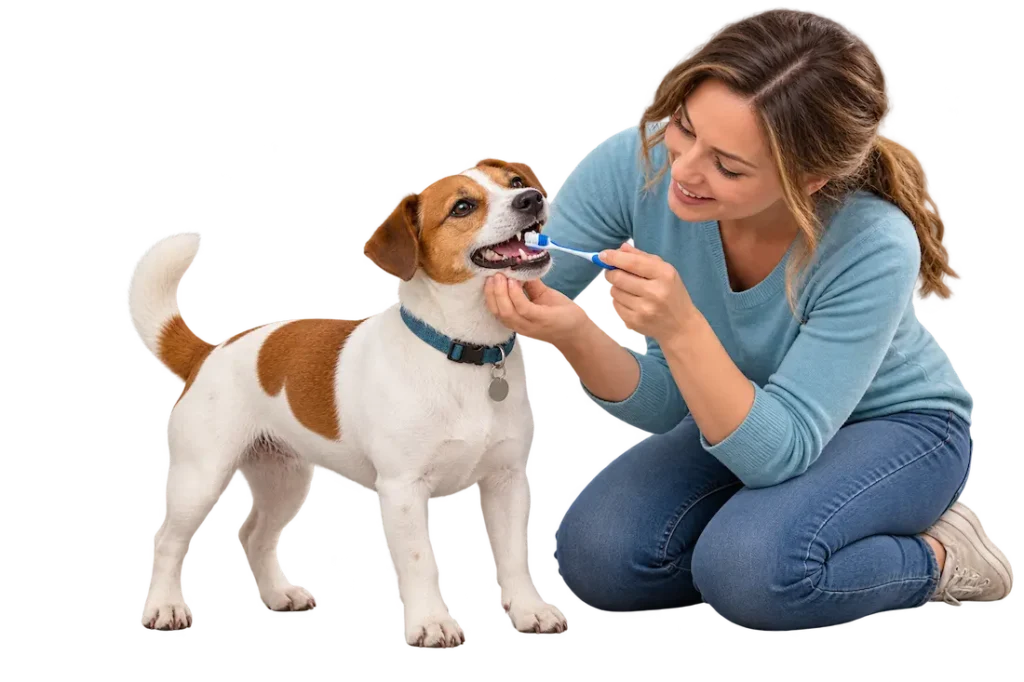
If you want to keep your dog’s teeth healthy, regular brushing is the best place to start. It helps control plaque before it hardens into tartar and gives you a chance to notice changes in your dog’s teeth or gums before they become bigger problems.
Ideally, brushing should become part of your dog’s regular routine. And if you’re already thinking, “My dog is never going to let me do that,” don’t worry — we’ll get to that too!
Where Should I Start?
Start or continue a regular brushing routine.
Build up gradually before introducing the toothbrush.
Consider evidence-supported dental products alongside gradual brushing training.
Speak to your vet before trying to solve it with home dental care.
How Often Should You Brush Your Dog’s Teeth?
Daily brushing is the goal because plaque starts building up again quickly after teeth are cleaned. If daily brushing sounds a bit ambitious right now, don’t let that put you off starting. The important thing is to build a routine that you and your dog can actually stick with — then work toward brushing every day.
And the earlier you get your dog comfortable with having their mouth handled, the easier life tends to be. With a puppy, you’re not just thinking about those little puppy teeth; you’re teaching them that fingers, toothpaste and eventually a toothbrush near their mouth are nothing to worry about.
Got a puppy?
This is a great time to introduce gentle mouth handling and toothbrushing gradually. Think of it as training for a lifetime of healthier teeth, rather than waiting until there’s a dental problem.
What You Need to Brush Your Dog’s Teeth
You don’t need much — just the right toothbrush, dog-safe toothpaste and, especially at first, a little patience.
A soft toothbrush: Choose one that’s comfortable to hold and appropriately sized for your dog’s mouth. A small, soft brush can make it much easier to reach the teeth without wrestling with something too bulky.
Dog toothpaste: Always use toothpaste made specifically for dogs. Don’t use human toothpaste, as some ingredients in products intended for people aren’t safe for dogs to swallow.
Treats or praise: Not essential for cleaning the teeth, obviously, but very useful for convincing your dog that this strange new routine might actually be worth cooperating with!
Before You Pick Up the Toothbrush
Before you start, take a quick look at your dog’s mouth only if they’re comfortable with you doing so.
If the gums look sore, red or swollen, there’s bleeding, obvious heavy tartar, a damaged or loose tooth, or your dog seems painful around the mouth, don’t launch into a new brushing routine. Those are reasons to speak to your vet first.
And if your dog is likely to snap or bite when you touch their mouth, don’t risk it. Leave the mouth examination to your vet.
Getting Your Dog Used to Having Their Teeth Brushed
If your dog has never had their teeth brushed before, don’t expect to arrive with a toothbrush on day one and have them politely open wide!
Take it slowly. The first goal isn’t sparkling teeth — it’s getting your dog comfortable with you touching around their mouth.
1. Start with mouth handling
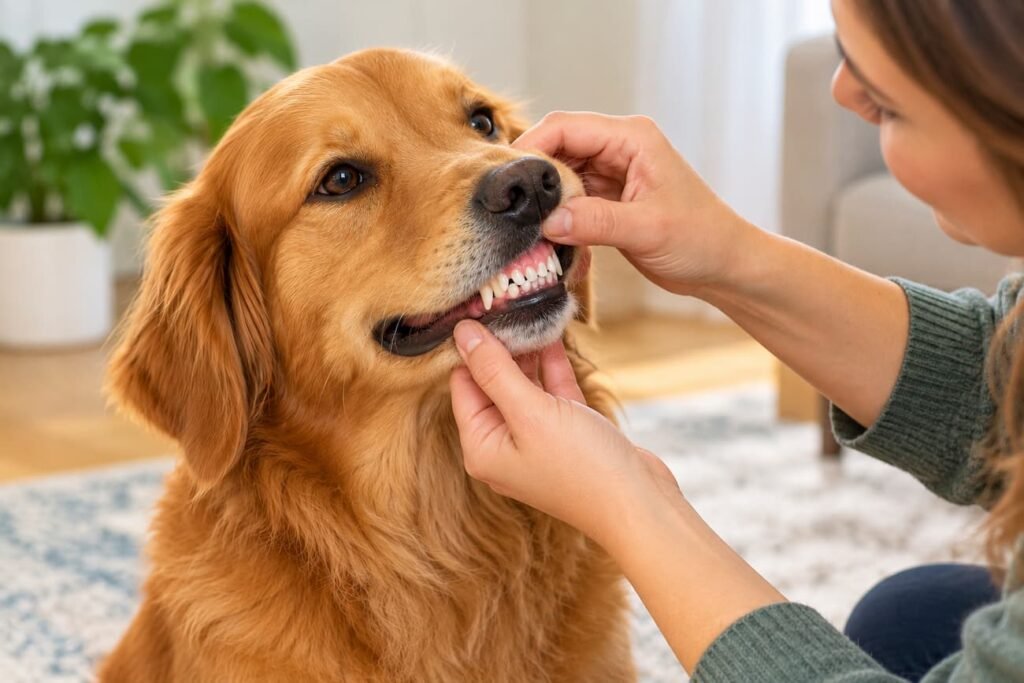
When your dog is relaxed, gently touch around their muzzle and lift their lips for a few seconds. Praise or reward them, then stop. Keep these early sessions short and positive.
2. Introduce the toothpaste
Let your dog investigate a small amount of dog toothpaste before you attempt any brushing. Once they’re comfortable with it, you can introduce a little around the teeth and gums with your finger.
3. Introduce the toothbrush
When your dog is happy with the previous steps, let them sniff and investigate the toothbrush. Gradually progress to touching it against the teeth rather than immediately attempting a full brushing session.
4. Build up gradually
Start with just a few teeth and increase the amount you brush as your dog becomes comfortable. There’s no prize for getting the whole mouth done on your first attempt.
Don’t force it.
If your dog becomes frightened, distressed or defensive, stop and try again another time. If you’re concerned they may bite, don’t put your fingers or a toothbrush into their mouth — ask your vet for advice instead.
How to Brush Your Dog’s Teeth
Once your dog is comfortable with the toothbrush, you’re ready to start actually cleaning those fangs.
Don’t worry about getting every tooth perfectly clean the first few times. A calm dog and a short, successful brushing session are much more useful than turning it into a wrestling match.
1. Get your dog comfortable
Choose a quiet time when your dog is relaxed. Have your toothbrush and dog toothpaste ready before you start.
2. Lift the lip gently
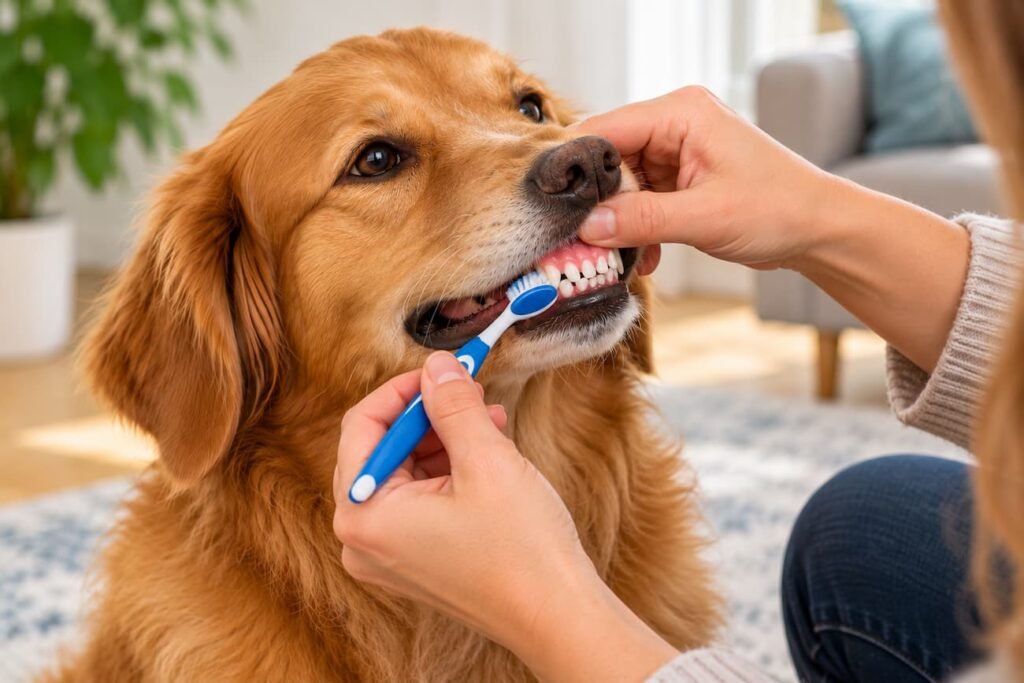
You don’t need to force your dog’s mouth wide open. Gently lift the lip so you can reach the outside surfaces of the teeth and the gumline.
3. Brush gently
Using a soft toothbrush and dog toothpaste, gently brush the outer surfaces of the teeth, paying particular attention to where the teeth meet the gums.
4. Work around the mouth
Move gradually from one area to another. If your dog has only just started accepting brushing, doing a small section successfully is absolutely fine.
5. Finish on a good note
Praise your dog when you’re finished — and if a small reward helps make tomorrow’s toothbrushing session easier, I’m all for a little bribery!
You don’t have to pry your dog’s jaws open.
Most of your attention should be on the accessible outer surfaces of the teeth. Gently lifting the lip makes the job much easier for both of you.
What Should Healthy Dog Teeth and Gums Look Like?
Once you’re brushing regularly, you’ll naturally get to know what your dog’s mouth normally looks like. That’s useful because changes can be much easier to spot when you know what’s normal for your dog.
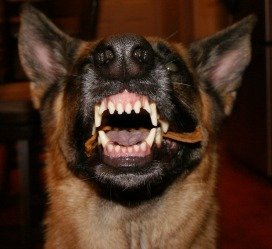
This is Ava’s mouth. Her teeth weren’t movie-star white, but they were in pretty good shape — and yes, I brushed them regularly!
Teeth
Healthy teeth don’t necessarily have to be dazzling white. What you’re watching for is a change from your dog’s normal appearance, particularly obvious plaque or tartar buildup, damaged or loose teeth, or anything else that suddenly looks different.
Gums
Healthy gums are generally pink, although dogs can naturally have areas of dark pigmentation. What you don’t want to see is new redness, swelling, bleeding or obvious soreness around the gumline.
| ✓ Generally Reassuring | ⚠ Worth Veterinary Attention |
|---|---|
| Teeth without heavy tartar buildup | Heavy or increasing tartar |
| Gums that look healthy for your dog | Red, swollen or bleeding gums |
| Normal dark gum pigmentation | New or unexplained changes in the mouth |
| Comfortable eating and chewing | Pain or difficulty eating |
| No obvious damaged teeth | Loose, broken or damaged teeth |
Plaque, Tartar and When Brushing Isn’t Enough
There’s an important difference between plaque and tartar, because brushing can help with one but isn’t going to magically get rid of the other.
Plaque is the soft film that continually builds up on the teeth. Regular brushing helps remove it before it has the chance to cause bigger problems.
Tartar (calculus) is plaque that has hardened onto the tooth. Once it’s firmly attached, brushing won’t remove it — and this is where professional dental care may be needed.
So if you can see substantial tartar around your dog’s teeth, particularly near the gumline, don’t be tempted to attack it with a dental scraper at home. A veterinary dental examination can reveal problems that aren’t visible just by looking in your dog’s mouth, including disease below the gumline.
When Does Your Dog Need a Professional Dental Cleaning?
Home dental care is about preventing problems as much as possible, but it can’t fix everything. If tartar has already hardened onto the teeth or there’s disease below the gumline, brushing harder isn’t going to solve it.
Your vet can examine your dog’s mouth and advise whether a professional dental cleaning is needed. A proper veterinary dental procedure allows the teeth to be examined and cleaned above and below the gumline, where problems aren’t always visible from the outside.
Signs It’s Time to See Your Vet
Don’t wait for your dog’s teeth to look terrible before asking your vet to take a look. Make an appointment if you notice:
- persistent bad breath
- red, swollen or bleeding gums
- substantial tartar buildup
- loose, broken or damaged teeth
- difficulty chewing, dropping food or reluctance to eat
- excessive drooling
- swelling around the mouth or face
- obvious pain when the mouth is touched
- pus or discharge around the gums
- unusual nasal discharge, particularly if accompanied by dental or facial symptoms
If something about your dog’s mouth has changed and you’re not sure whether it’s normal, it’s always reasonable to ask your vet.
What If Your Dog Won’t Let You Brush?
Some dogs take to toothbrushing surprisingly well. Others behave as though you’ve just suggested something completely outrageous.
If your dog simply isn’t used to having their mouth handled, go back to the gradual introduction we covered earlier. Even if you can only brush a few teeth at first, that’s progress. Don’t turn it into a battle — you’re trying to build a routine you’ll both tolerate for years.
But what if brushing really isn’t practical?
Alternatives to Brushing Your Dog’s Teeth
Dental chews, dental diets, water additives, oral gels and wipes are all available for dog dental care. Some can help control plaque or tartar, but “dental” on the packaging doesn’t automatically mean the product has been shown to work.
A useful shortcut is to look for the Veterinary Oral Health Council (VOHC) Seal of Acceptance. VOHC reviews evidence for dental products and awards its seal to products that meet its standards for helping control plaque and/or tartar, so it’s a useful place to start when you’re choosing something for your dog.
Think supplement, not magic substitute
If brushing is possible, keep working toward it. Evidence-supported dental products can be a useful addition to your dog’s routine, especially if brushing is difficult, but they can’t treat existing dental disease.
If your dog already has substantial tartar, sore or bleeding gums, pain or other signs of dental problems, it’s time for a veterinary dental check rather than another home dental product.
What About Bones for Cleaning Dogs’ Teeth?
You may have heard that chewing bones helps keep a dog’s teeth clean, but I wouldn’t rely on bones as part of a dental-care routine. Bones and other very hard chews can fracture or damage teeth, and a broken tooth is definitely not the result we’re aiming for!
If you want to give your dog something to chew as part of their dental routine, look for an appropriately sized dental chew with evidence behind it rather than assuming that anything hard enough to scrape the teeth must be good for them. The VOHC Seal of Acceptance is a useful place to start when choosing dental products.
Making Dog Teeth Care Part of the Routine
Looking after your dog’s teeth doesn’t have to become a major event. A few minutes spent brushing regularly can go a long way toward keeping plaque under control — and you’ll also become familiar with your dog’s mouth, making it easier to notice when something doesn’t look quite right.
Start slowly, make toothbrushing as positive as you can, and don’t worry if your dog doesn’t cooperate perfectly from day one. Like most things with dogs, a little patience (and perhaps the occasional bit of bribery!) can make life much easier.
And remember, home dental care is about prevention. If you spot tartar, sore gums, damaged teeth or signs of pain, that’s the point to get your vet involved rather than trying to tackle the problem yourself.
Looking after your dog’s teeth is just one part of keeping them healthy and comfortable. For more practical everyday advice, visit my Dog Care Tips guide.
References
- American Animal Hospital Association (AAHA). 2019 AAHA Dental Care Guidelines for Dogs and Cats – Recommending Home Oral Hygiene and Products.
AAHA dental care guidelines - American Animal Hospital Association (AAHA). Dog & Cat Dental Disease: Signs, Professional Cleanings, Anesthesia, and Home Care.
AAHA pet dental care guidance - Veterinary Oral Health Council (VOHC). Accepted Products for Dogs.
VOHC accepted products - Cornell University College of Veterinary Medicine. Risks from a Fractured Tooth.
Cornell: Risks from a Fractured Tooth