
How to Stop Puppy Biting
Gentle Training, Bite Inhibition & Practical Tips
Those puppy teeth may be tiny, but boy, can they hurt! Biting and mouthing are perfectly normal puppy behaviors, but that doesn’t mean your hands, ankles and clothes have to become chew toys. Here’s how to teach your puppy what is OK to bite — calmly, consistently and without frightening or confusing them.
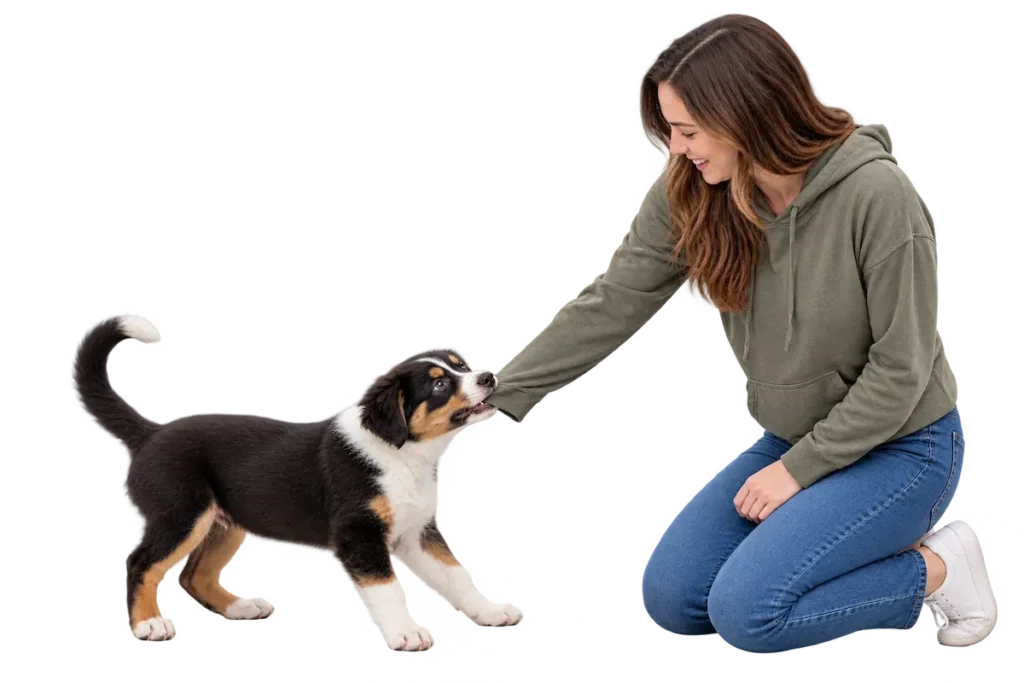
Why Is My Puppy Biting Me?
First things first — your puppy isn’t biting because they’re “bad.” Puppies explore the world with their mouths, and biting, mouthing and chewing are all perfectly normal parts of growing up.
They also learn an important lesson while playing with their mother and littermates: how hard is too hard? Bite a sibling too enthusiastically and the fun may suddenly stop. Over time, that feedback helps puppies learn to control the pressure of their mouths — something known as bite inhibition.
Once your puppy comes home with you, though, you’re likely to become part of the experiment. Hands, trouser legs, shoelaces and ankles can all look remarkably inviting to an excited puppy!
And not every biting episode has exactly the same cause. Your puppy may be:
Playing and exploring — puppies naturally investigate things with their mouths.
Teething — chewing can help when those new teeth and gums are uncomfortable.
Overexcited — energetic play can quickly turn into increasingly enthusiastic nipping.
Overtired or overstimulated — sometimes the little furry land shark rampaging around the house actually needs some downtime.
Looking for interaction — if biting reliably gets your attention, even telling your puppy off can become part of the game.
Figuring out what’s behind the biting makes it much easier to decide what to do about it.
What to Do When Your Puppy Bites
When those little teeth make contact, try not to turn it into a battle. Your puppy needs a simple, consistent message: biting people makes the fun stop; biting appropriate things keeps it going.
1. Stop the interaction
If your puppy bites your hand, arm or clothing, stop playing and become boring for a moment. Remove your attention rather than wrestling, pushing them away or turning it into another exciting game.
2. Redirect those teeth
Give your puppy something they are allowed to sink their teeth into — a suitable chew or toy. Keeping one within reach during particularly bitey times can save both your patience and your fingers.
3. If they keep biting, end the fun
If your puppy ignores the toy and comes straight back for another piece of you, calmly end the interaction. Move away or briefly remove yourself so they learn that persistent biting doesn’t earn more attention.
4. Watch what your puppy does next
Some puppies will stop when they hear a calm “ouch.” Others hear it and apparently think, Excellent! My human squeaks! Let’s do that again.
If saying “ouch” makes your puppy more excited or bite harder, skip it. Quietly ending the interaction sends the message without adding more excitement.
5. Be consistent
Everyone in the household needs to respond in roughly the same way. If biting ends play with you but starts a wonderful game of hand wrestling with somebody else, your puppy has a pretty confusing set of rules to figure out.
And don’t expect perfection overnight. You’re teaching an excitable baby animal how to control behavior that comes completely naturally to them. Repetition and consistency matter far more than one “perfect” training session.
What Is Bite Inhibition?
Bite inhibition simply means learning to control the force of a bite.
Puppies begin learning this while they’re still with their mother and littermates. During play, one puppy bites another too hard, the other puppy reacts or stops playing, and our enthusiastic little biter begins to discover that using those teeth too roughly has consequences.
It’s an important lesson because dogs don’t have hands. They use their mouths to explore, carry things, communicate and play.
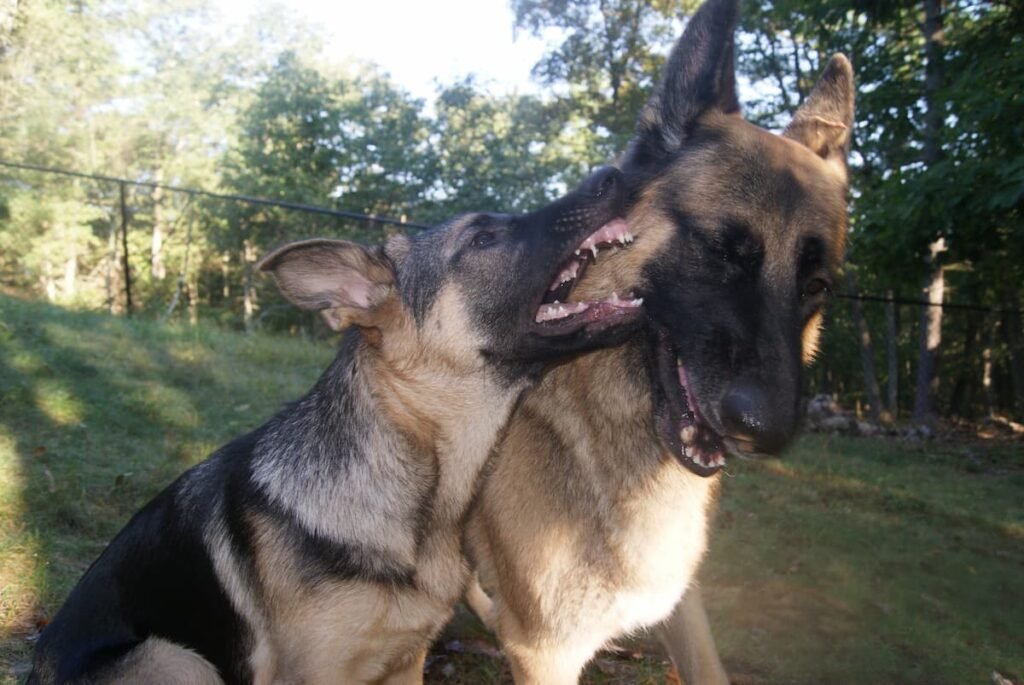
Bite Inhibition Doesn't Mean Letting Your Puppy Bite You
This is where things can get a little confusing.
Teaching bite inhibition and teaching your puppy not to use people as chew toys aren’t opposing ideas. Your puppy can learn to control their mouth while also learning that human skin and clothing aren’t appropriate things to bite.
You don’t need to deliberately offer your hands for your puppy to practice biting. Instead, everyday interactions give you plenty of opportunities to teach both lessons:
Too much tooth pressure → the interaction stops.
Appropriate play and chewing → the fun can continue.
Over time, the goal is not simply a puppy who bites more softly. It’s a puppy who develops better control of their mouth and learns when using those teeth isn’t appropriate at all.
Bite inhibition ≠ permission to bite
The aim is to help your puppy develop good control of their mouth while also teaching them that people and clothing aren’t chew toys.
Give Those Puppy Teeth Something Better to Bite
Telling your puppy what not to bite is only half the job. You also need to give those busy little teeth somewhere appropriate to go.
Keep a few suitable puppy toys and chews handy, especially in the places where biting tends to happen. If your puppy regularly launches an attack on your ankles while you’re sitting on the sofa, having a toy within arm’s reach is considerably easier than trying to find one with a puppy attached to your trouser leg!
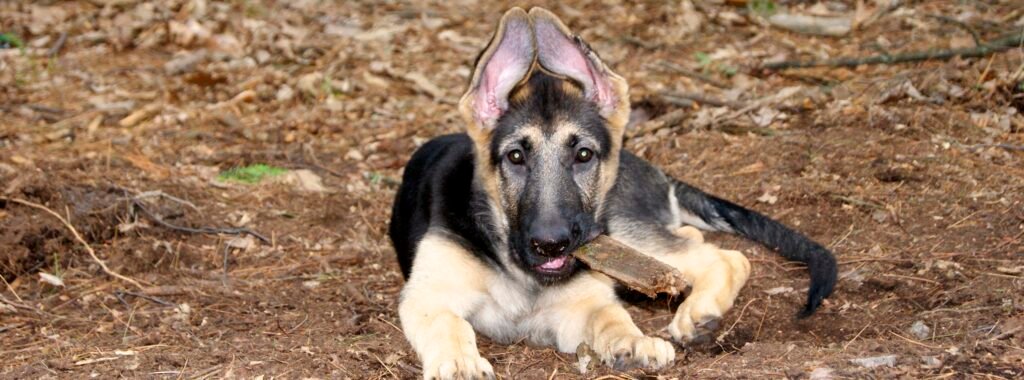
Match the Solution to the Biting
What your puppy needs can depend on what’s driving the biting in the first place.
| If Your Puppy Is... | Try... |
|---|---|
| 🦷 Teething and chewing everything | Offer an appropriate puppy-safe chew or teething toy. |
| 🎾 Biting during play | Redirect the game onto a toy instead of your hands. |
| 👖 Chasing feet or grabbing clothing | Stop moving and redirect your puppy onto a toy rather than turning it into a chase. |
| 🌪️ Getting increasingly wild and bitey | End the excitement and give your puppy a chance to settle. |
| 😴 Biting when overtired | Give your puppy some quiet downtime and an opportunity to rest rather than adding more energetic play. |
Prevent Puppy Biting Before It Starts
Sometimes the easiest puppy bite to deal with is the one that never happens.
Start paying attention to when your puppy gets particularly mouthy. You may soon spot a pattern. Perhaps it’s during energetic play, when visitors arrive, or every evening when your previously adorable puppy suddenly appears to have been replaced by a small furry piranha.
Once you recognize those triggers, you can step in earlier.
Don't Overlook an Overtired Puppy
Puppies need plenty of rest, and tired puppies don’t always look tired. Some become increasingly excitable, zoom around, grab clothes and seem determined to bite anything within reach.
If your puppy has been awake and busy for a while and the biting is getting progressively worse, more play isn’t necessarily the answer. Help them settle somewhere calm and give them an opportunity to rest.
Keep Play From Getting Too Wild
Exciting games can quickly send some puppies over the top. If you notice the biting becoming harder or more frequent as play continues, wind things down before your puppy reaches that point.
Use toys rather than hands for rough-and-tumble games, and mix energetic activities with calmer ones.
Give Your Puppy Plenty to Do
Appropriate play, training, sniffing and chewing all give a puppy somewhere useful to direct that seemingly endless supply of energy.
You don’t need to exhaust your puppy — in fact, trying to wear them out can sometimes leave you with an overtired puppy who’s even more difficult to live with. Aim for a sensible balance of activity, mental stimulation and rest.
The more you learn to recognize your own puppy’s “I’m about to get bitey” signals, the easier it becomes to intervene before your hands and trouser legs pay the price.
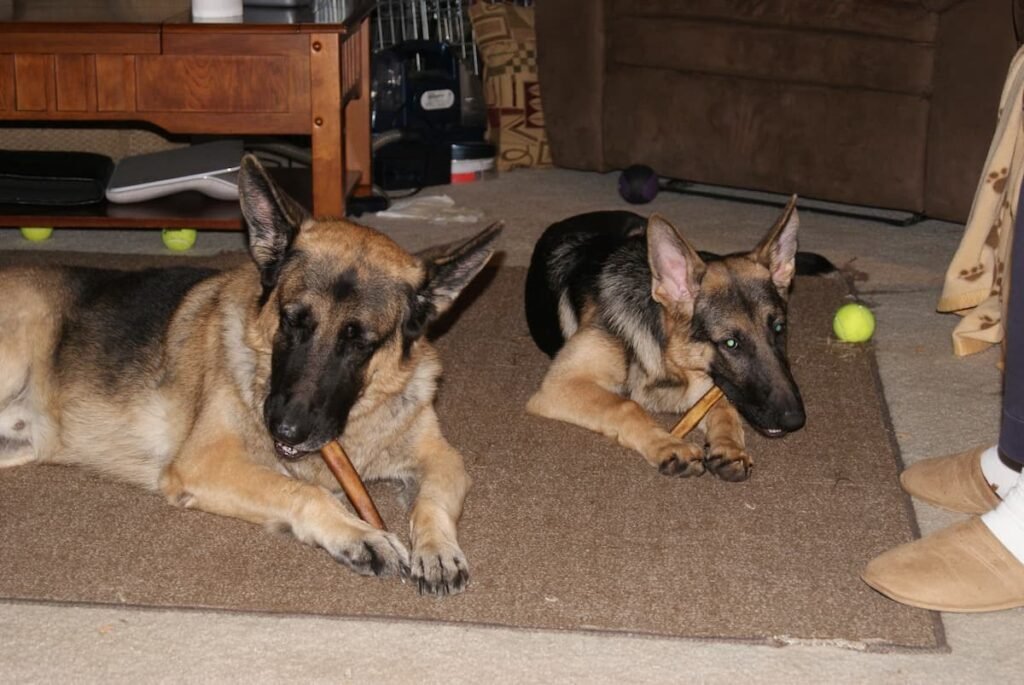
What NOT to Do When Your Puppy Bites
Those needle-sharp puppy teeth can test anyone’s patience, especially when you’ve redirected your puppy for what feels like the hundredth time that day. But getting physical or frightening your puppy isn’t the answer.
Avoid hitting or smacking your puppy, holding their muzzle shut, shouting at them or using intimidating corrections to stop the biting.
Apart from being unnecessary, punishment can frighten your puppy or add even more excitement to an already overexcited situation. It also doesn’t do a particularly good job of teaching them what you want them to do instead.
Go back to the basics: stop the interaction, redirect onto something appropriate and give an overexcited or overtired puppy a chance to settle down.
And remember that pushing or wrestling your puppy away can sometimes backfire too. To an excited puppy, your desperately flapping hands may look less like “please stop biting me” and more like “fantastic — the game just got better!”
Calm and consistent may not feel terribly dramatic, but that’s rather the point.
Puppies, Biting & Children
Puppies and children can make wonderful playmates, but a mouthy puppy and an excited child aren’t always the best combination.
An adult should supervise interactions between children and a puppy, especially while the puppy is still learning to control those teeth. Don’t expect a child to be responsible for teaching bite inhibition or dealing with a puppy that’s getting increasingly excited and bitey.
Children may squeal, run, wave their hands or pull away when a puppy nips — all perfectly understandable reactions that can also make an excited puppy want to chase and grab even more.
Instead, let an adult handle the training and show children how to interact calmly with the puppy. If play is becoming too rough or your puppy is getting overexcited, it’s time for the adult to step in and bring the interaction to an end.
Children + puppies = adult supervision
Don’t leave young children and puppies together unsupervised, and don’t ask children to manage a biting or overexcited puppy themselves.
When Is Puppy Biting a Concern?
Most puppy biting is exactly that — puppy biting. It’s part of normal play, exploration and development, and it doesn’t automatically mean you have an aggressive puppy on your hands.
But that doesn’t mean every biting problem should simply be shrugged off as something your puppy will grow out of.
If the biting seems unusually intense, is getting worse rather than improving, or happens alongside behavior that genuinely worries you — such as fear or guarding — it’s worth getting some professional advice rather than trying increasingly forceful training methods at home.
A qualified dog training or behavior professional can help you work out what’s triggering the behavior and how best to handle it. If the biting appears suddenly, particularly alongside signs that your puppy may be uncomfortable or unwell, speak to your veterinarian too.
There’s no prize for struggling on alone. If something about your puppy’s behavior doesn’t feel right, getting good advice early can make life easier for both of you.
Those Puppy Teeth Won't Last Forever
When you’re in the middle of the puppy-biting stage, it can sometimes feel as though you’ve brought home a set of teeth with a puppy attached.
But biting and mouthing are a normal part of puppyhood, and your job isn’t to stop your puppy being a puppy. It’s to help them learn what those teeth are — and aren’t — for.
Stay consistent, give them appropriate things to chew and play with, end the fun when teeth get too enthusiastic, and pay attention to the times when your puppy is tired, overstimulated or simply needs a break.
There will probably still be days when your hands and trouser legs wonder whether any of this is working.
Keep at it. Your puppy is learning.
Working on more than puppy biting? Visit our puppy training guide for help with the other important lessons your puppy needs to learn.
References
VCA Animal Hospitals — Play Biting in Puppies
Play Biting in Puppies
American Veterinary Society of Animal Behavior — Humane Dog Training Position Statement
Humane Dog Training Position Statement
Blue Cross — Puppy Biting and Mouthing
Puppy Biting and Mouthing