
Socializing Puppies
Build Your Puppy’s Confidence From the Start
Socializing your puppy isn’t about meeting as many people and dogs as possible. It’s about helping your pup discover that new people, places, sounds and experiences can be safe — and even fun — without pushing them faster than they’re ready to go.

What Is Puppy Socialization?
Socializing puppies is about much more than introducing them to lots of people and dogs. It means helping your puppy experience the world around them — new people, animals, places, sounds and everyday situations — in a way that feels safe and positive.
And that last bit is important.
Imagine taking your puppy to an outdoor shopping mall. If people passing by calmly offer your pup a treat while you let them watch everything from a comfortable distance, they may decide this is a pretty fantastic place.
Take that same puppy to the same place and drag them around on the leash while people and shopping bags whizz past, and you could create a completely different impression.
Same place. Very different experience.
That’s really what good puppy socialization is about. Your puppy doesn’t have to greet everyone or investigate everything. They need opportunities to see, hear and experience new things without being frightened or overwhelmed — and to approach when they feel comfortable.
How to Socialize a Puppy the Right Way
The trick is to introduce your puppy to a wide variety of people, places and experiences without overwhelming them. New doesn’t automatically mean scary — but it’s our job to make sure it doesn’t become scary either.
When your puppy meets someone new, let your pup decide whether they want to approach. Ask the person to stay fairly quiet and relaxed rather than immediately reaching down, picking them up or making a huge fuss.
A treat can work wonders here. If your puppy chooses to move closer, the person can offer a treat and, if your pup is comfortable, some gentle petting.
Never force an introduction. If your puppy hangs back, that’s OK. Give them some space and let them watch. Calmly observing a new person from a comfortable distance is socialization too.
With children, I’d be particularly careful. Excited children and excited puppies can be quite a combination! Keep the interaction calm and supervised, and don’t let children pull your puppy around or overwhelm them with handling.
Over time, introduce your pup to people of different ages, appearances and voices, as well as people wearing things such as hats, glasses or uniforms. Pair those experiences with something your puppy enjoys — treats, play or simply feeling safe beside you.
🐾 Your puppy sets the pace
Relaxed or curious? Carry on.
Unsure or hesitant? Give them more distance or make the experience easier.
Frightened or overwhelmed? Stop and try again another time at a gentler level.
When Should You Start Socializing a Puppy?
The sooner you start, the better. Puppies have an especially important socialization or sensitive period during their first few months of life, when they’re particularly receptive to learning about the world around them.
That’s why those early weeks are such a valuable opportunity. Good breeders will usually have started the process before your puppy even comes home, gently introducing the litter to different people, sounds, handling and everyday experiences.
Once your puppy comes home, give them a little time to settle in, then carry on building those positive experiences. Socialization is also an important part of training a puppy, alongside things like house training, handling and learning everyday manners.
But don’t panic if your puppy is already older. The early socialization period is especially important, but learning doesn’t suddenly stop when that window closes. Older puppies and adolescent dogs can still benefit enormously from carefully managed, positive new experiences.
Don’t wait for “the perfect time”
Your puppy’s early developmental period overlaps with their vaccination schedule. That doesn’t mean choosing between socialization and keeping your puppy safe — it means choosing appropriate experiences for their age, vaccination status and local disease risk.
Socializing Your Puppy Before Vaccinations Are Complete
Here’s the tricky bit. Your puppy’s most important early socialization period starts before their vaccination course is complete.
So waiting until every vaccination is finished before introducing your puppy to the world isn’t the answer. Instead, the aim is to find safer ways for them to experience it while they’re still building immunity.
Your own vet is the best person to advise you about where your puppy can safely go. Disease risk isn’t identical everywhere, and your puppy’s age, vaccination status and local risks all matter.
In the meantime, there’s plenty you can do without putting your puppy straight down in busy places used by lots of unfamiliar dogs.
For example, you can:
- invite different people to your home for calm, puppy-paced introductions;
- arrange carefully supervised meetings with healthy, vaccinated dogs you know;
- take your puppy for car rides and let them watch the world;
- carry your puppy, or use a suitable carrier or stroller, in places where walking on the ground may not yet be appropriate;
- let them experience everyday sights, sounds and activity from a safe distance;
- introduce different surfaces, household noises, gentle handling and everyday objects at home.
The important thing is that these are positive experiences, not a race to tick things off a list.
I’d avoid high-risk environments such as dog parks and other areas heavily used by dogs of unknown vaccination or health status until your vet says they’re appropriate for your puppy.
What About Puppy Socialization Classes?
A well-run puppy class can be a brilliant way to introduce your pup to other puppies, people and new experiences in a controlled environment.
Ask your vet to recommend a reputable local class and check what vaccination, parasite-control and hygiene requirements the class has before enrolling.
Our vets hosted a puppy socialization class every week, and I took Ava along. It gave her the chance to meet other puppies as well as all those different owners in a much more controlled setting.

Socializing Your Puppy After Vaccinations
Once your vet is happy for your puppy to explore more freely, you can gradually widen their world.
Now you can introduce different walks, busier places and a greater variety of people, dogs and everyday situations. But don’t suddenly turn socialization into a whirlwind tour!
The same rule still applies: quality matters more than quantity.
Let your puppy watch new things from a comfortable distance, reward relaxed curiosity and give them time to investigate at their own pace. They don’t need to greet every person or dog they see. Learning that they can calmly pass by is valuable socialization too.
Some puppies will take new experiences in their stride; others need a little more time. That’s fine. Confidence comes from discovering “I can handle this” — not from being pushed through something frightening.
Puppy Socialization Checklist: What Should Your Puppy Experience?
Your puppy doesn’t need to race through this list or experience everything in the first few weeks. Think of it as ideas for gradually introducing them to the sort of things they’ll encounter throughout life.
Watch your puppy as you go. If they’re relaxed and curious, great. If they’re worried, make things easier, give them more distance and try again when they’re comfortable.
People
- Men and women
- Babies and toddlers
- Children and teenagers
- Older people
- People of different appearances, heights and builds
- People with beards
- People wearing hats, glasses, uniforms, scarves or unusual clothing

Animals
- Friendly dogs of different sizes and appearances
- Puppies
- Cats, where appropriate
- Livestock
- Other animals your puppy is likely to encounter

Places & Surfaces
- Quiet streets
- Busier places
- Shops and dog-friendly places
- Grass, gravel and pavement
- Wooden and slippery floors
- Steps
- Different indoor and outdoor environments

Sounds & Objects
- Traffic and street noise
- Doorbells and knocks
- Vacuum cleaners
- Household appliances and noises
- Umbrellas, bins and bags
- Other unfamiliar objects

Handling & Care
- Paws
- Ears and mouth
- Gentle handling around the body
- Brushing
- Collar and harness handling
- Grooming
- Vet-style handling and examinations
Travel/Movement
- Car rides
- People running or exercising
- Bicycles
- Scooters and skateboards
- Wheelchairs and crutches
- Pushchairs/strollers
- Other types of transport
What If Your Puppy Gets Scared?
Even with careful socialization, something will probably frighten your puppy at some point. A noisy truck, an overenthusiastic dog or a strange-looking object can suddenly seem like the scariest thing on earth.
The important thing is not to force your puppy to face it.
Give them more distance, let them retreat if they want to, and wait until they’re comfortable before trying again at an easier level. You can use treats, play or reassurance to help create a more positive association — but let your puppy decide how close they’re ready to get.
Learn to Spot the Early Signs of Fear
Your puppy may be telling you they’re uncomfortable if they:
- back away or try to escape
- tuck their tail
- freeze or crouch
- turn their head or body away
- lick their lips
- tremble or pant
- hide behind you
- suddenly refuse treats or stop playing
These signals can be subtle, particularly at first. Spotting them early gives you the chance to make the situation easier before your puppy becomes overwhelmed.
What About Puppy Fear Periods?
You may also notice times when your puppy suddenly seems wary of something they were perfectly happy with before. Puppies and adolescent dogs can go through periods when they appear more sensitive or fearful.
If that happens, don’t stop socializing altogether. Take the pressure off instead. Keep experiences comfortable, give your puppy plenty of choice and avoid forcing them into situations they’re struggling with.
If your puppy’s fear is intense, keeps happening, or they don’t recover readily after something frightens them, talk to your vet or a suitably qualified behaviour professional for advice.
Meeting Other Dogs on Walks
Once your puppy is out and about, meeting other dogs becomes part of everyday life. But socialization doesn’t mean your puppy needs to say hello to every dog they pass.
If your puppy is still getting used to walking beside you, our guide to leash training a puppy will help with that too.
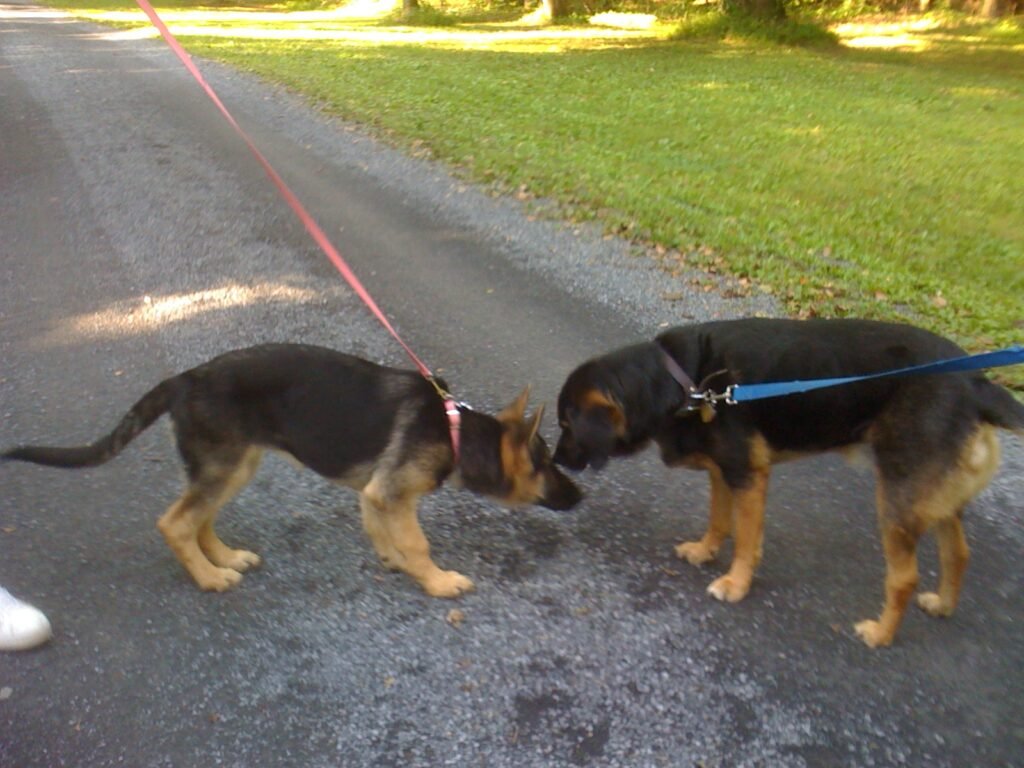
Choose interactions carefully. If the other dog seems friendly and relaxed and both owners are happy for them to meet, give your puppy the choice to approach rather than pulling them straight into a greeting.
Keep the lead loose if you can, watch both dogs’ body language and keep those first greetings fairly brief. If your puppy hangs back or would rather carry on walking, that’s absolutely fine too.
Learning to calmly walk past another dog is just as valuable as learning to greet one politely.
Socializing Puppies Is About Confidence, Not Numbers
It’s easy to turn puppy socialization into a giant checklist of people, dogs and places your puppy must experience. But good socialization isn’t really about how many boxes you can tick.
What matters is helping your puppy discover that the world is generally a safe and interesting place — without pushing them faster than they’re ready to go.
Give them plenty of positive experiences, watch what their body language is telling you and let them approach new things at their own pace. Some puppies will bound into everything without a second thought; others prefer to hang back and take it all in first.
And that’s OK.
You’re not trying to create the world’s most sociable puppy. And socialization is only one part of raising a well-adjusted pup — you’ll find more practical help in my puppy training tips.
You’re helping to build a confident dog who can cope comfortably with everyday life.
References
American Veterinary Society of Animal Behavior (AVSAB) — Puppy Socialization Position Statement
AVSAB Puppy Socialization Position Statement
American Animal Hospital Association (AAHA) — What to Do When You First Bring Home a New Puppy
AAHA Puppy Socialization Guidance
VCA Animal Hospitals — Puppy Behavior and Training: Socialization and Fear Prevention
VCA Socialization and Fear Prevention