
Dog Skin Infection
Signs, Causes & What to Do Next
Red, itchy, sore or smelly skin can be signs of a dog skin infection — but several skin problems can look remarkably similar. Here’s how to recognize the possible signs, what may be causing them, and how your vet can get to the bottom of the problem.

Recognizing the Signs of a Dog Skin Infection
When your dog is scratching like crazy and you find red, sore or smelly skin underneath all that fur, infection is certainly one possibility. But unfortunately, dog skin problems aren’t always very good at wearing name tags!
Bacterial and yeast infections can share symptoms with allergies, parasites and other skin conditions, so what you see can give you useful clues without necessarily telling you what’s causing the problem.
Use the guide below to help you make sense of what you’re seeing.
| What you notice | What it could mean | What to do next |
|---|---|---|
| Red, itchy or inflamed skin | Infection is possible, but allergies, parasites and other skin problems can cause very similar signs. | Check for other changes such as bumps, crusting, odor, discharge or hair loss. |
| Bumps, pimples, pustules, crusts or scabs | These can occur with a bacterial skin infection (pyoderma), although appearance alone isn't enough for a diagnosis. | A vet can examine the skin and use tests such as cytology to help identify the cause. |
| Greasy or flaky skin with a noticeable odor | Yeast overgrowth may be one possibility, particularly when itching is also present. | Don't rely on smell alone. Your vet can check whether yeast, bacteria or another problem is involved. |
| Hair loss from an itchy or sore area | Infection may be present, but hair loss can also result from scratching, licking or the underlying skin condition itself. | Look at the whole pattern rather than this symptom alone. |
| Pus, discharge, painful swelling, ulcers or draining sores | These can indicate a more serious or deeper skin problem. | Have your dog examined promptly by your veterinarian. |
| Repeated licking, chewing or scratching | Something is making the skin itchy or uncomfortable. Infection may be secondary to the original problem. | Finding the underlying cause is important, especially if the problem keeps returning. |
When to See Your Vet
Not every itchy patch of skin is an emergency, but you don’t need to wait until your dog has a nasty abscess before asking your vet for help.
Have your dog checked if the skin problem is painful, spreading or getting worse, keeps coming back, or you’re simply not sure what’s causing it.
Seek veterinary attention promptly if you notice:
pus or draining sores;
marked swelling or painful skin;
ulcers or widespread lesions;
rapidly worsening symptoms;
your dog seems generally unwell, unusually tired or isn’t eating normally.
And if you’ve been treating a skin problem but it isn’t improving as expected, that’s another good reason to have it reassessed. Sometimes the problem that looks obvious isn’t the real culprit — and that’s when a bit of veterinary detective work can save you and your dog from going round in circles.
What Causes Skin Infections in Dogs?
You may be wondering how on earth your best pal ended up with a skin infection in the first place. Quite often, the infection isn’t where the problem started.
Allergies, parasites and other skin problems can make your dog itch, lick and scratch. That damages the skin’s natural protective barrier, making it easier for bacteria or yeast to cause a secondary infection.
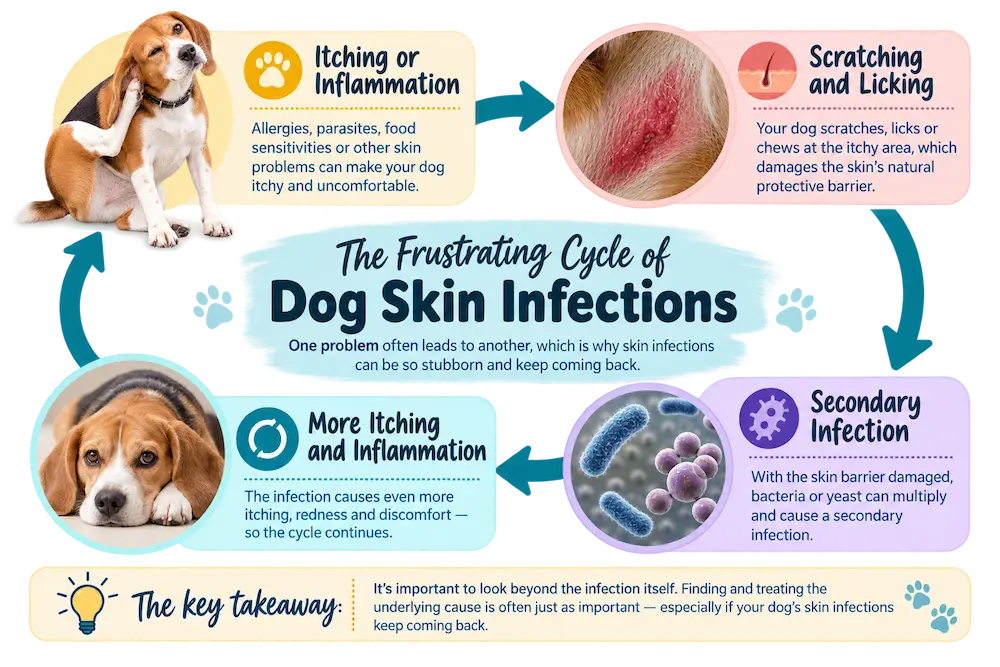
It can become a frustrating cycle:
Itching or inflammation → scratching and licking → damaged skin → infection → even more itching and inflammation
Some dogs are particularly prone to skin problems, including those with allergies, dogs that lick or scratch excessively, and breeds with lots of skin folds. Warm, damp areas of skin can also provide conditions in which microorganisms can multiply.
And remember the muddy-puddle enthusiast! Dogs that spend lots of time swimming or staying damp may also develop skin problems — although getting wet or dirty doesn’t automatically mean an infection will follow.
The important thing is to look beyond the infection itself. If there’s an underlying problem driving it, treating that problem may be just as important as treating the infection — especially if your dog’s skin infections keep coming back.
Bacterial Skin Infections in Dogs
Bacterial skin infections in dogs are often referred to as pyoderma. They can affect the surface of the skin or extend deeper into the tissues, and you may notice redness, bumps or pustules, crusts, hair loss, itching or sore areas.
Quite often, though, the bacteria aren’t the whole story.
Allergies, parasites and other itchy skin conditions can lead to repeated scratching and licking, damaging the skin barrier and making infection more likely. That’s why a dog that keeps getting bacterial skin infections may need the underlying cause investigated too — otherwise you can end up treating the same problem over and over again.
Is it a hot spot?
If your dog has developed a very red, sore patch of skin that seems to have appeared or spread quickly, take a look at my guide to hot spots in dogs. They can develop surprisingly fast and need a slightly different discussion from the more general skin infections we’re covering here.
How Does a Vet Know It's Bacterial?
This is where appearances can be deceptive. Bacterial infections, yeast and other skin problems can look remarkably similar — and unfortunately, your dog can’t tell you which one is making them itch!
Your vet may examine samples from the affected skin under a microscope, a test known as skin cytology. Depending on what the skin looks like, how severe the problem is and whether infections keep returning, additional testing may sometimes be needed.
It takes some of the guesswork out of the equation and helps your vet choose a treatment based on what’s actually going on with your dog’s skin.
Treatment for Bacterial Skin Infections
Treatment depends on how deep or widespread the infection is, what your vet finds on examination and, importantly, what caused the skin problem in the first place.
For many surface or superficial bacterial infections, topical antimicrobial treatment is now the preferred approach. Depending on your dog’s skin, coat and the area affected, your vet may recommend a medicated shampoo, spray, mousse, cream or wipes.
Deeper infections are a different matter. These may need systemic antibiotics as well as topical treatment, and your vet may take samples for bacterial culture and susceptibility testing to help choose the right medication.
So rather than following a one-size-fits-all bathing schedule, follow the treatment plan recommended for your dog and have the skin rechecked if advised.
And don’t forget the other half of the puzzle. Clearing the infection is only part of the job if allergies, parasites or another skin problem started the whole itch-and-scratch cycle in the first place.
Yeast Skin Infections in Dogs
Have you noticed a rather distinctive musty or “yeasty” smell coming from your dog’s skin — even after a bath? Yeast overgrowth is another possible cause of itchy, irritated skin.
You may also notice redness, greasy or flaky skin, persistent itching and licking. Warm, moist areas can be particularly troublesome, including skin folds and around the paws and ears.
But smell, itching or paw licking alone can’t confirm yeast. Bacterial infections, allergies and other skin problems can produce similar signs, which is why veterinary testing can be useful when you’re not sure what you’re dealing with.
If yeast does turn out to be the culprit, getting rid of it is only part of the story. Treatment will depend on where the problem is and how widespread it is, but it’s also worth finding out what’s allowing the yeast to keep getting the upper hand — especially if you’ve been through this before.
For a much more detailed look at the symptoms, causes and treatment, see my guide to yeast infections in dogs.
What About Puppy Acne and Impetigo?
Got a pimply puppy? No, I don’t mean “spotty” like a Dalmatian — I mean actual spots!
Puppies can develop skin problems including acne and impetigo. Impetigo typically causes small pus-filled lesions on sparsely haired areas such as the belly and groin, while canine acne tends to affect the chin and lips and may cause red bumps, pustules or blackheads.
Although mild cases can sometimes be relatively straightforward, it’s worth having suspicious spots checked rather than reaching automatically for a medicated shampoo. Other skin conditions can look similar, and treatment will depend on what your puppy actually has and how severe it is.
If the spots are painful, spreading, producing a lot of discharge or simply aren’t clearing up, have your vet take a look.
Why Does My Dog’s Skin Infection Keep Coming Back?
You finally get your dog’s skin looking good again… and a few weeks or months later, you’re back where you started. Frustrating, isn’t it?
When skin infections keep returning, it’s worth asking why it keeps happening, rather than simply treating each new flare-up. Allergies, parasites and other conditions that disrupt or inflame the skin can make it easier for infection to take hold again.
That’s why repeated infections deserve another conversation with your vet. The aim isn’t just to clear up what’s happening on the skin today, but to work out what’s opening the door for it in the first place.
Are Dog Skin Infections Contagious?
Not necessarily. Whether a skin problem can spread to another pet — or to you — depends on what’s actually causing it.
Some infectious skin conditions can be contagious, but many bacterial and yeast problems aren’t simply something your dog has “caught” from another dog. They can develop when something disrupts the skin’s normal defenses and gives bacteria or yeast the opportunity to get out of balance.
So if you don’t yet know what’s causing those suspicious-looking patches — particularly if another pet or someone in the family is developing skin problems too — it’s sensible to check with your vet.
The Bottom Line
Skin infections can make your dog pretty miserable, but the trick isn’t just getting rid of the infection — it’s figuring out why it happened in the first place.
If your dog keeps scratching, licking or developing sore skin, don’t get too hung up on trying to decide whether it “looks bacterial” or “looks like yeast.” There can be a lot of overlap, and getting the cause right gives you a much better chance of getting the problem under control — and keeping it that way.
If you’re still trying to work out what might be bothering your dog’s skin, head over to my Dog Skin Conditions guide for a broader look at the common culprits.
References
International Society for Companion Animal Infectious Diseases (ISCAID). Antimicrobial Use Guidelines for Canine Pyoderma. Veterinary Dermatology, 2025.
Merck Veterinary Manual. Pyoderma in Dogs and Cats. Reviewed October 2025.
Merck Veterinary Manual. Diagnosis of Skin Diseases in Small Animals. Reviewed May 2025.