
Introducing a New Puppy to Your Existing Dog
Help Your Dogs Get Off to the Best Possible Start
Bringing home a new puppy is exciting—but your current best pal may not be quite as thrilled as you are! A calm, carefully managed introduction can make those first meetings much easier and help both dogs adjust to their new life together.

Before You Introduce Your New Puppy
A little planning now can save you a lot of headaches once puppy and pooch come face-to-face.
The most important thing is to avoid simply bringing your puppy through the front door and hoping for the best. Your home and yard are already your dog’s territory, so arrange their first meeting somewhere neutral—or at least somewhere your dog doesn’t strongly regard as their own.
Choose a quiet, controlled area where you won’t have unknown dogs wandering up to interrupt you. If your puppy hasn’t completed their vaccinations, you’ll also need to consider the risk of exposure to infectious disease when choosing where they meet.
Have two adults available if possible, so each dog has someone looking after them, and bring plenty of small, tasty treats. You’ll use those to help your existing dog build a positive association with the newcomer.
One important exception: if your dog guards food, don’t scatter treats where both dogs can compete for them. Keep their rewards safely separated.
Before the first meeting:
Two adults • Small tasty treats • Leads • Quiet, controlled meeting place
How to Introduce Your New Puppy to Your Dog
Now for the introductions. Don’t be in a hurry to get the dogs nose-to-nose—the aim isn’t to make them meet as quickly as possible, but to let them become comfortable with each other’s presence.
Start with one adult handling each dog. Keep both dogs on leads and begin far enough apart that neither seems worried or overly excited by the other.
Let them notice each other from a distance. Reward calm behavior with a small tasty treat. We want your current best pal to discover that having this newcomer around can mean good things happen.
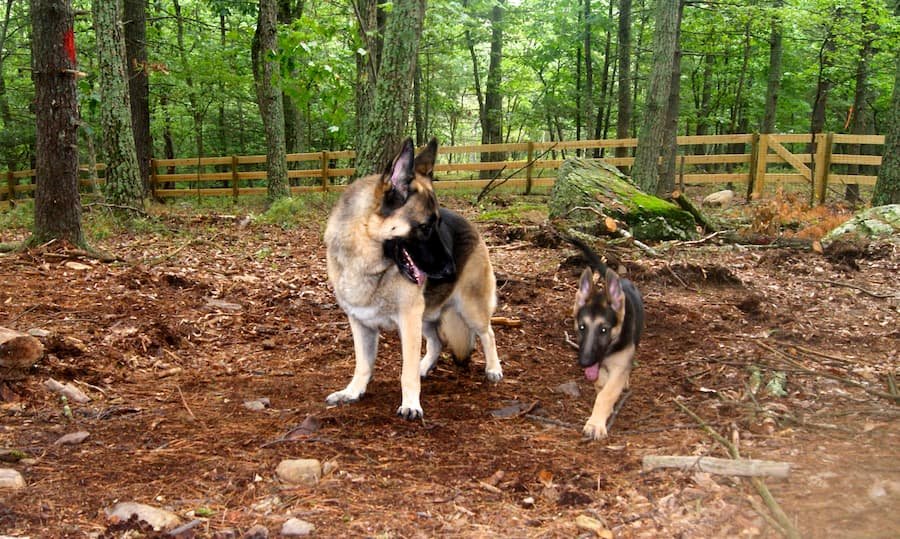
Begin walking in the same direction. Walk the dogs parallel to one another with some space between them rather than heading directly toward each other.
Gradually reduce the distance. If both dogs remain relaxed, you can slowly bring them closer. There’s no prize for speed here—let their body language tell you how quickly to progress.
Allow a brief greeting when they’re ready. If both dogs voluntarily show an interest in getting closer, allow them to sniff each other for a few seconds, keeping the leads loose rather than pulling them together.
Keep moving. Rather than expecting them to stand together and become instant best friends, continue walking and let them spend some time exploring their surroundings in each other’s company.
Why All the Treats?
You’re helping your existing dog form a positive association with the puppy. Seeing the newcomer and remaining calm brings something enjoyable—praise, a tasty treat and a pleasant walk.
Just remember that treats need a little more care if either dog guards food. Reward the dogs separately rather than scattering food between them or creating something worth competing over.
Travelling Home Together?
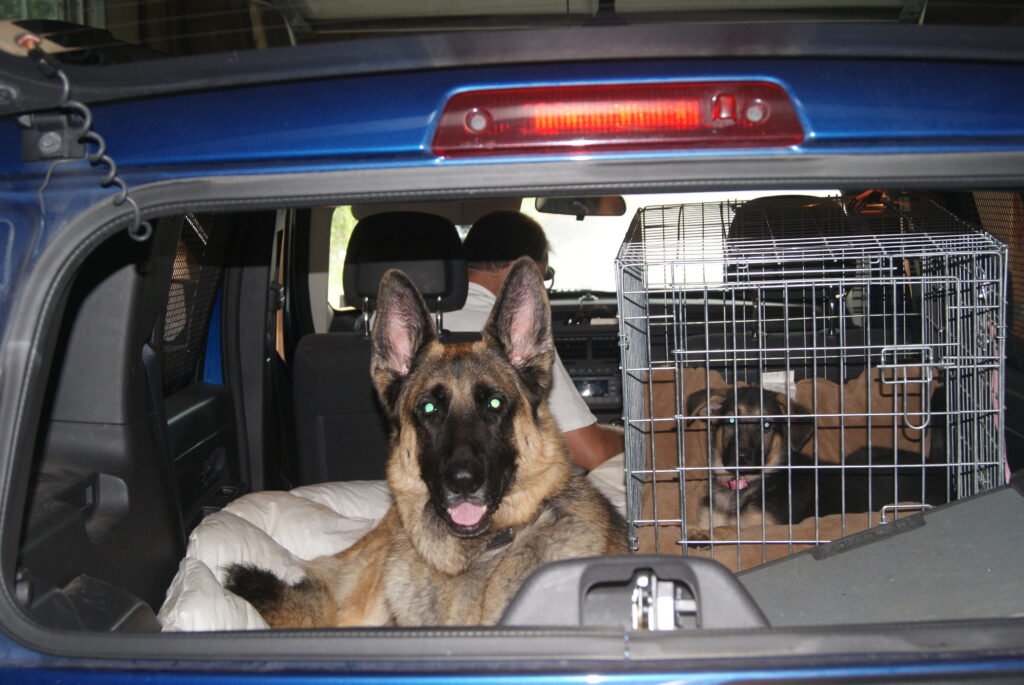
If both dogs will be travelling home in the same vehicle after their introduction, don’t expect them to share the space freely straight away. Keep them safely separated for the journey—for example, with the puppy secured in an appropriate crate.
That’s exactly what we did here. Our puppy travelled in her crate while our older dog had his own space alongside her.
When You Get Home
Even if the first meeting went beautifully, take things slowly when you get home. Your existing dog is now sharing familiar territory—and all the interesting things in it—with a brand-new puppy.
Supervise their time together at first and give each dog their own space to eat and rest. Be careful with favorite toys, chews or anything else your dog may consider worth guarding until you know how they’ll behave around each other.
Your puppy will probably think your older dog is the most exciting thing on four legs. Your older dog may not agree! Make sure your current dog has somewhere to retreat where the puppy can’t follow, and continue giving them some one-to-one time with you.
When you can’t supervise them, separate them safely rather than leaving them to sort things out for themselves. A puppy pen, baby gate or properly introduced crate can make this much easier.
For the first few days:
Separate meals • Manage toys & chews • Supervise play • Provide puppy-free space • Separate when unsupervised
Is This Going Well?
Don’t expect your dog and puppy to become instant best friends. A growl or a desire for some space doesn’t automatically mean the introduction has failed—but neither should you wait for a situation to turn into a fight before stepping in.
Watch both dogs and be ready to give them a break when either one is becoming uncomfortable.
Looking Good
- Loose, relaxed bodies
- Voluntary approaches
- Able to move away from each other
- Taking natural breaks
- Comfortable exploring nearby
Time for a Break
- Repeatedly trying to get away
- Hiding or freezing
- Body becoming increasingly tense
- Puppy won’t stop pestering the older dog
- One dog can’t comfortably disengage
Stop & Separate
- Sustained threatening behavior
- Repeated lunging or escalating aggression
- A fight breaks out
- One dog cannot safely disengage
- Either dog is injured
Don’t Punish a Growl
A growl is communication. Don’t punish your dog simply for growling at the puppy. Instead, look at what caused it and give the dogs more space if needed.
Your older dog shouldn’t have to put up with relentless puppy pestering, and things shouldn’t have to get increasingly heated before the puppy gets the message. Sometimes the best thing you can do for both of them is simply call time on the interaction and give everyone a break.
What If Your Puppy Is Scared?
Some puppies will be much more cautious than others. If your puppy hangs back, hides or seems worried about your older dog, don’t rush them.
Give your puppy enough space to watch from a distance and let them decide when they’re ready to move closer. Reward calm curiosity and any voluntary approach, but make sure they can retreat again whenever they need to.
Most importantly, never pick up your puppy and carry them over to “meet” your dog. Being trapped in your arms with an unfamiliar dog approaching can make an already worried puppy feel even less secure.
If your puppy wants reassurance from you, it’s fine to provide it calmly. Then give them more distance and try again later rather than pushing ahead with the introduction.
What If You Have More Than One Dog?
If you already have several dogs at home, introduce your puppy to each dog separately at first rather than bringing the whole gang together at once.
One-to-one introductions are easier to manage and let you see how each dog responds to the newcomer without the added excitement and pressure of the whole group.
Once those individual meetings are going well, you can gradually spend time together as a group—still keeping a close eye on everyone and giving them breaks when needed.
The First Days and Weeks Together
A successful first meeting is a great start, but your dogs still need time to get used to living together. One good first meeting doesn’t mean you can put your feet up just yet. Keep an eye on their interactions over the next few days and weeks while everyone settles into the new arrangement.
Puppies aren’t exactly famous for their manners! Your new pup may follow your older dog everywhere, steal the best sleeping spot, interrupt naps and repeatedly try to start a game when your older dog would much rather be left alone.
Your adult dog may sometimes growl, move away or otherwise tell the puppy they’ve had enough. That’s useful communication, but don’t make your older dog responsible for teaching the puppy all the rules. Step in and redirect your puppy or give the dogs some time apart before frustration has a chance to build.
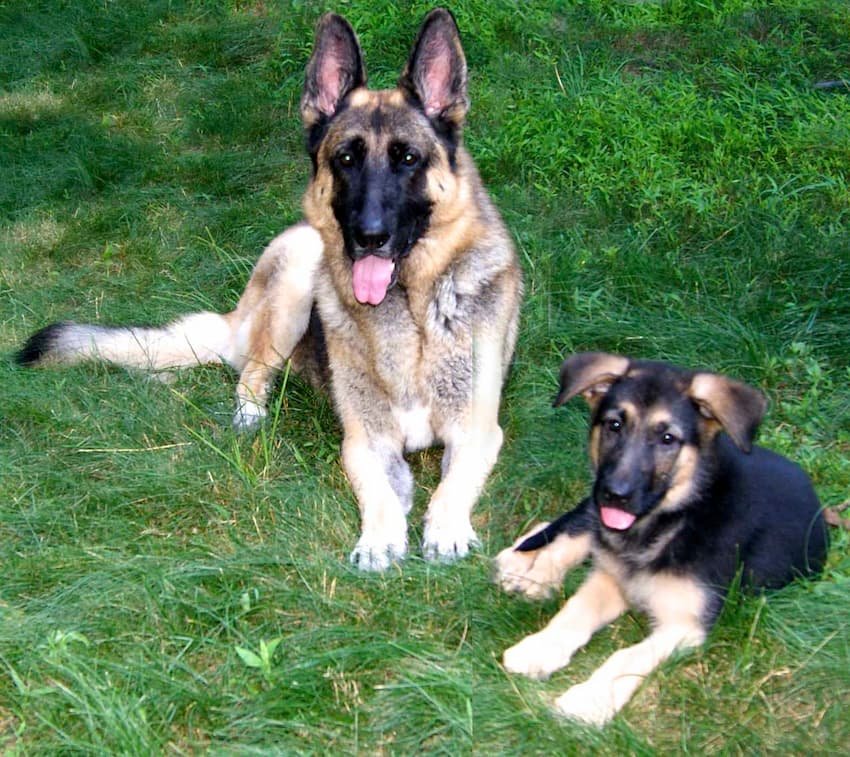
Keep giving your existing dog attention and opportunities to do the things they enjoyed before the puppy arrived. At the same time, give your puppy plenty of sleep, training, play and time with you so your older dog doesn’t become their only source of entertainment.
Don’t worry if they aren’t curled up together by the end of the first week. Some dogs become friends quickly; others need much longer simply to become comfortable sharing their home.
When You Can't Supervise
Until you’re confident about how your dogs behave together, don’t leave them loose together when nobody is watching. Use a baby gate, puppy pen, separate room or crate to give them safe time apart.
A crate can be particularly useful if your puppy is already comfortable and happy in one. It gives an overtired puppy somewhere to settle and your older dog a well-earned break from those needle-sharp puppy teeth and endless invitations to play!
Just don’t use the crate as punishment for pestering the older dog. You want it to remain somewhere your puppy is happy to relax, not the place they get sent when they’ve been “naughty.”
When to Get Professional Help
Some dogs simply need more time than others, but if the tension between your dogs is persistent or getting worse rather than better, don’t keep repeating introductions and hoping they’ll eventually sort it out.
If you’re seeing repeated threatening behavior, lunging, fighting, or either dog seems unable to relax safely around the other, separate them and get help from a qualified dog behavior professional. Getting advice early can be much easier than trying to repair a relationship after things have seriously deteriorated.
And if either dog is injured during an interaction, separate them safely and contact your veterinarian for advice.
Bringing home a puppy comes with plenty more questions! For help with everything from those early days to feeding, training and growing up, take a look through my puppy information and advice.