
Leash Training a Puppy: 4 Ways to Stop Pulling
Teach Your Puppy to Walk Calmly on a Loose Leash
Puppies aren’t born knowing how to walk nicely on a leash—you have to teach them. And because every puppy is different, I’ll show you four positive training methods so you can find the one that works best for yours.
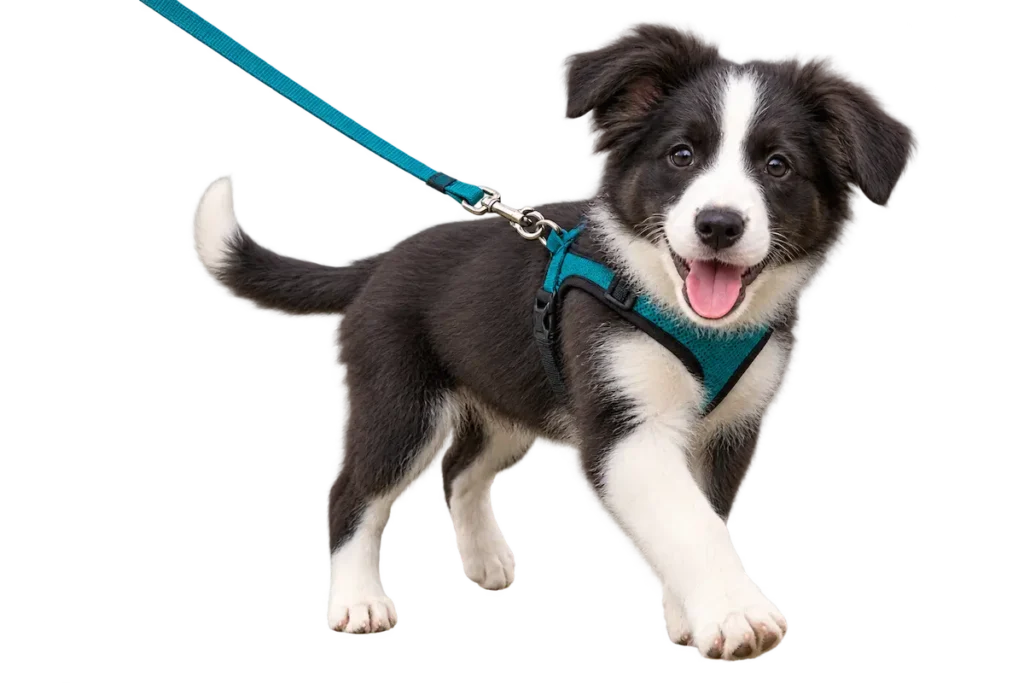
What Does Successful Leash Training Look Like?
Your puppy doesn’t need to march along glued to your leg. For everyday walks, the goal is much simpler: a puppy who can walk with you on a loose leash without constantly pulling you toward whatever has caught their attention.
I know that sounds obvious, but walking calmly on a leash is something you actually need to teach. Most puppies would much rather investigate everything—and get there NOW!
The good news is that once your puppy understands that staying connected with you is rewarding, walks become much more enjoyable for both of you.
Loose-leash walking ≠ heel
For normal walks, your puppy can sniff, explore and enjoy being a puppy. You’re teaching them not to drag you around on a tight leash—not asking for a formal heel every step of the way.
When Should You Start Leash Training a Puppy?
You can start getting your puppy used to a collar or harness and leash from an early age, including when you first bring them home. Keep those first sessions short, positive and somewhere familiar—you certainly don’t need to wait until you’re ready for proper walks.
There is an important difference between learning leash skills at home and heading out into public places, though. If your puppy hasn’t completed their vaccinations, ask your veterinarian when and where it’s safe for them to walk outside. Local disease risks can vary, so this isn’t something I’d base on a one-size-fits-all age.
What You Need Before You Start
- Plenty of tasty treats. Choose small, soft treats your puppy really likes, and keep them somewhere you can reach quickly.
- A regular leash. A lightweight leash around 6 feet long gives you enough room to create some slack. Avoid a retractable leash while you’re teaching loose-leash walking.
- A well-fitting collar or harness. Whichever you use, make sure it fits your puppy properly and they’re comfortable wearing it.
- A quiet place to practise. Start indoors where there are very few distractions. The outside world can wait until your puppy understands the basics.
- Short, positive sessions. Puppies have short attention spans. A few successful minutes are much more useful than carrying on until you’re both fed up.
Keep it positive
These methods are about rewarding the behaviour you want—not correcting your puppy with painful or frightening equipment.
How Leash Training Progresses
1. Start indoors
Begin somewhere familiar with very few distractions.
2. Get attention
Teach them that paying attention to you is rewarding.
3. Add the leash
Practise the same skills while keeping the leash loose.
4. Head outside
Try the yard or another calm outdoor area.
5. Add distractions
Build up slowly towards normal everyday walks.
4 Ways to Leash Train Your Puppy
Because every puppy—and every person—learns a little differently, it’s useful to have more than one method to try. These four approaches all have the same goal: teaching your puppy that walking with you on a loose leash is rewarding.
Don’t worry if the first method isn’t the one that clicks. Sometimes a different approach simply makes more sense to a particular puppy.
Method 1 — Stop, Reconnect and Reward
Before you add the leash, teach your puppy to respond to a particular sound. It could be a click of your tongue, a gentle tap on your leg or another sound you can use consistently.
Start somewhere quiet. Make your chosen sound and reward your puppy when they look towards you. With a little practice, they’ll begin to associate that sound with turning their attention back to you.
Teach Your Puppy to Follow You
Once your puppy is reliably looking at you when they hear the sound:
- Make your sound. When your puppy looks towards you, give them plenty of praise—but hold onto the treat for a moment.
- Take a couple of steps backwards. Your puppy should follow you for the treat.
- If they follow, bingo! Give them the treat and praise them.
- Repeat 5 or 6 times, moving in different directions, until your puppy is consistently following you.
Your puppy has now learned an important first lesson: when you ask for their attention, following you pays off.
Add the Leash
Now attach the leash, but don’t rush straight out onto a busy walk. Practise the same exercise somewhere quiet, such as indoors or in your yard.
Keep the leash loose while you make your attention sound, move away and reward your puppy for following you.
Once your puppy is doing this consistently, you’re ready to try the exercise somewhere quiet outside.
What to Do When the Leash Goes Tight
Take plenty of treats with you and keep them somewhere easy to reach.
- Start walking with your puppy.
- The moment the leash goes tight, stop.
- Wait a couple of seconds. Don’t move forward.
- Make your attention sound.
- As your puppy turns towards you, praise them.
- Take a couple of steps backwards and encourage them to follow.
- When they follow and the leash becomes loose again, reward them.
- Start walking again and repeat whenever the leash tightens.
The important bit is consistency: your puppy learns that a tight leash doesn’t get them where they want to go. Moving forward happens when the leash is loose.
Method 2 — Change Direction
If stopping and reconnecting isn’t working for your puppy, try changing direction instead. Have plenty of tasty treats ready and start walking forward together.
The moment the leash starts to tighten, turn and walk in the opposite direction. Encourage your puppy to follow you, and as soon as they catch up and the leash is loose again, give them a treat.
If the leash tightens again, change direction again. You don’t always have to turn completely around—you can go left, right or diagonally. The important thing is that you don’t continue in the direction your puppy is pulling towards.
With practice, your puppy begins to learn that pulling doesn’t get them where they want to go, while staying connected with you keeps the walk moving.
And some puppies get this very quickly. Others don’t get it at all and you can end up going around in circles! If that’s happening, don’t battle on with it—one of the other methods may simply suit your puppy better.
Going around in circles?
Don’t worry about forcing this method to work. Try one of the other approaches instead.
Method 3 — Make Following You a Game
For some puppies, the best way to keep their attention is to make yourself more interesting than everything else around them. Have plenty of tasty treats ready—or use a favourite toy if that’s more motivating for your puppy.
Start somewhere quiet with your puppy on a regular leash. Face your puppy and take a few steps backwards, encouraging them to follow you. Make it a game and be exciting! When they follow, reward them.
Practise this a few times until your puppy is happily following you as you move backwards.
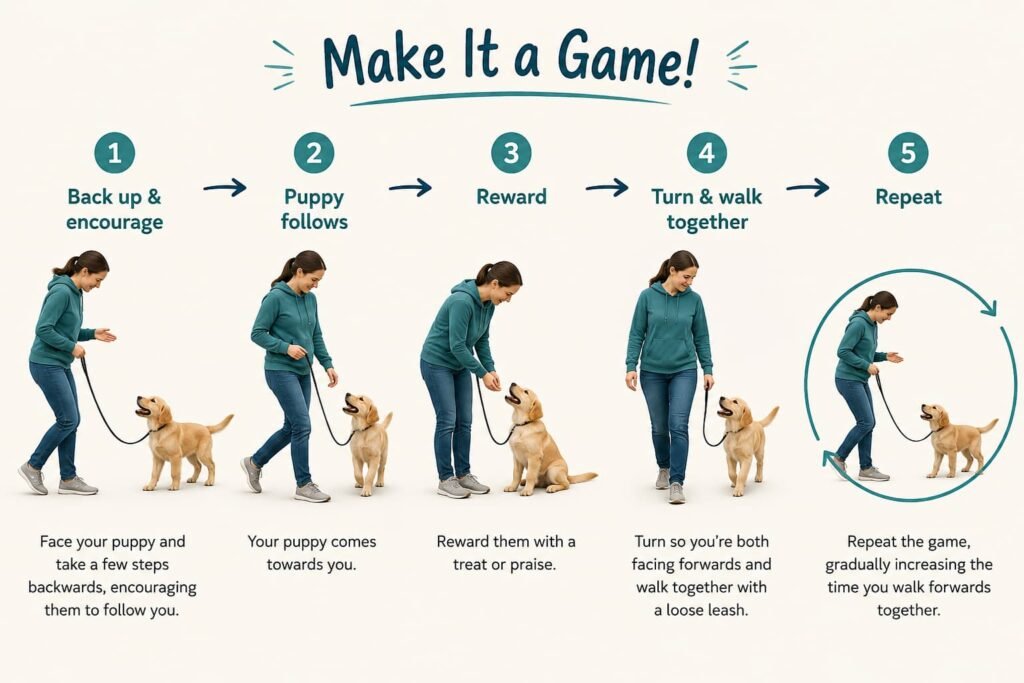
When your puppy comes towards you for their reward, turn so you’re both facing forwards, with your puppy beside you and the leash loose. Walk forward together for a few steps.
Before your puppy starts drifting away, turn back towards them and move backwards again, encouraging them to follow. When they catch up, turn forwards and walk together again.
Keep repeating the exercise, gradually increasing the amount of time you walk forwards together.
The important thing with this method is to be fun and rewarding enough that your puppy wants to stay with you. Lots of encouragement, plenty of rewards and absolutely no need to make this feel like serious work.
Method 4 — Reward Your Puppy for Staying Close
This method is a little different because, instead of waiting for your puppy to pull and then responding, you’re rewarding them for choosing to stay near you in the first place.
You’ll need a safe, open area with plenty of space, well away from traffic. Use a long training line attached to a well-fitting harness, rather than your puppy’s collar.
Using a long line safely
Choose an open area away from roads and other hazards. Attach the long line to a well-fitting harness and avoid letting it become tangled around you or your puppy.
Start walking around without constantly calling your puppy or trying to keep them beside you. Whenever they choose to come towards you or stay reasonably close, praise them and give them a treat.
Then move off again and give them another opportunity to make that same good choice.
Don’t worry about getting your puppy into a perfect position beside you. You’re simply helping them discover that staying connected with you is rewarding, even when they have more freedom to explore.
As your puppy gets better at checking in and staying closer, you can gradually practise with less freedom and eventually return to your regular leash.
Why This Method Can Help
Some puppies learn particularly well when they’re given a little more freedom to make the right choice for themselves. Rather than spending the whole session correcting where they’re going, you’re watching for the behaviour you want and rewarding it when it happens.
And that’s the lovely thing about having four methods to choose from—you don’t have to insist that your puppy learns in exactly the same way as somebody else’s.
Where Should You Practise Leash Training?
Once your puppy is doing well indoors or in the yard, it’s tempting to head straight out for a proper walk. But outside is a completely different world.
Suddenly there are smells to investigate, people to meet, dogs to watch, birds to chase and all sorts of things that are far more interesting than you!
So build up the distractions gradually. Start somewhere quiet and give your puppy a chance to succeed before making things more difficult.
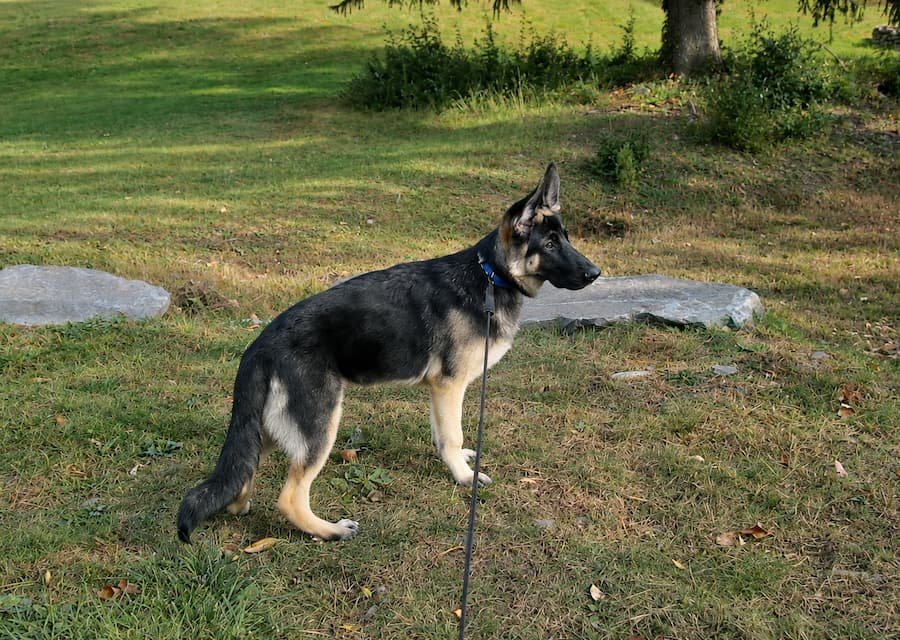
As they improve, you can gradually practise around:
- People and children
- Other dogs
- Bicycles and pushchairs
- Birds and other animals
- Busier roads and everyday street activity
- All those fascinating smells, sounds and things on the ground
If something is proving too exciting—or worrying—for your puppy, increase the distance from it and practise where they can still concentrate on you.
And here’s one lesson I learned the hard way: don’t start puppy leash training outside on garbage collection day! All those bags sitting along the roadside can be extremely distracting.
The aim isn’t to stop your puppy sniffing and exploring. That’s part of being a dog. You’re gradually teaching them that they can enjoy their surroundings without forgetting you’re at the other end of the leash.
Common Leash-Training Problems
Even when your puppy understands what you want, don’t expect every walk to go perfectly. Puppies get excited, distracted, worried and sometimes decide that the leash itself is the most interesting thing in the world.
Here are some of the most common problems you may run into—and what to do when they happen.
My Puppy Keeps Pulling
If your puppy keeps pulling, resist the temptation to simply pull them back towards you. Instead, go back to the basic rule they’ve been learning throughout this page: pulling shouldn’t be what gets them where they want to go.
If the leash tightens, stop and use the attention-and-reward technique from Method 1, or change direction as you did in Method 2. Reward your puppy when the leash is loose and you’re moving together again.
If they’re suddenly pulling much more than usual, look at what’s happening around you too. A puppy who walks beautifully in the yard may struggle when there are dogs, people, squirrels or wonderful new smells everywhere.
In that situation, don’t assume the training has failed. You’ve probably just made the lesson too difficult too quickly. Move farther away from the distraction or go somewhere quieter and practise again.
My Puppy Freezes or Refuses to Walk
If your puppy suddenly plants all four paws and refuses to move, don’t drag them along by the leash. First, try to work out why they’ve stopped.
They may simply be unsure about something ahead—a strange noise, another dog, traffic or something they’ve never seen before. Give them a moment to look and take it in rather than immediately trying to make them move.
If your puppy seems worried, create more distance from whatever is bothering them. Then encourage them towards you with a happy voice or a treat and reward them when they choose to move.
Don’t pull a worried puppy forward.
Give them space, make things easier and encourage them to choose to move towards you.
Sometimes puppies stop for much less dramatic reasons. They may be tired, overwhelmed by everything going on around them, or simply need a little more time to get used to walking on a leash.
Keep those early outings short and positive. You’re building confidence as well as teaching leash skills.
If your puppy repeatedly refuses to walk, appears painful, is limping or shows another physical change, don’t assume it’s a training problem—have them checked by your veterinarian.
My Puppy Bites the Leash
For some puppies, a dangling leash is apparently far too tempting to ignore. It moves, it bounces—and before you know it, your walk has turned into a game of tug-of-war.
Try not to join in. Pulling the leash back can make the game even more exciting.
Instead, stop moving and encourage your puppy to focus on you. Ask for something simple they already know, such as looking at you or sitting, then reward them when they let go of the leash and give you their attention.
You can also redirect them onto an appropriate toy before or after your walk if they’re in one of those particularly bitey puppy moods.
And think about when the leash biting happens. If it tends to start towards the end of a walk or training session, your puppy may simply be getting tired, frustrated or overexcited. That’s often your cue to finish rather than trying to squeeze in another five minutes.
If leash biting is becoming frequent or difficult to interrupt, make the training environment easier and shorten your sessions while you work on calm leash skills.
How Long Does Leash Training Take?
There’s no magic number of days or training sessions. Some puppies pick up loose-leash walking surprisingly quickly, while others need much more practice—especially once you add the distractions of the outside world.
And progress isn’t always a straight line. Your puppy might walk beautifully with you one day and apparently forget everything the next because a squirrel, another dog or a particularly fascinating smell has appeared.
That doesn’t mean you’re back to square one.
Keep practising in short sessions, reward the behaviour you want and make things easier again whenever your puppy is struggling. As their skills and confidence improve, you can gradually make the environment more challenging.
The goal isn’t a puppy who never looks away from you or stops to sniff. It’s a dog who can enjoy their walk without spending the whole thing pulling you from A to B.
Enjoy the Walk!
Leash training a puppy takes patience, practice and sometimes a fair bit of trial and error. Like most puppy training, it doesn’t always go perfectly the first time. If one method isn’t clicking with your puppy, try another. That’s exactly why I’ve given you four different ways to teach the same basic skill.
Keep your sessions short, make it fun and remember that your puppy doesn’t need to walk perfectly beside you. Let them sniff, explore and enjoy being out in the world—as long as they aren’t dragging you along behind them!
With practice, that excitable puppy who wants to get everywhere NOW! can learn that walking with you is pretty rewarding too.