
Puppy Potty Training Problems: What’s Going Wrong?
When potty training isn’t going to plan, there’s usually a reason.
Your puppy keeps having accidents, goes outside and then pees indoors, or perhaps was doing brilliantly and suddenly seems to have forgotten everything. Frustrating? Absolutely — and yes, I’ve been there!
Let’s work out what might be going wrong and, more importantly, what you can do to get potty training back on track.
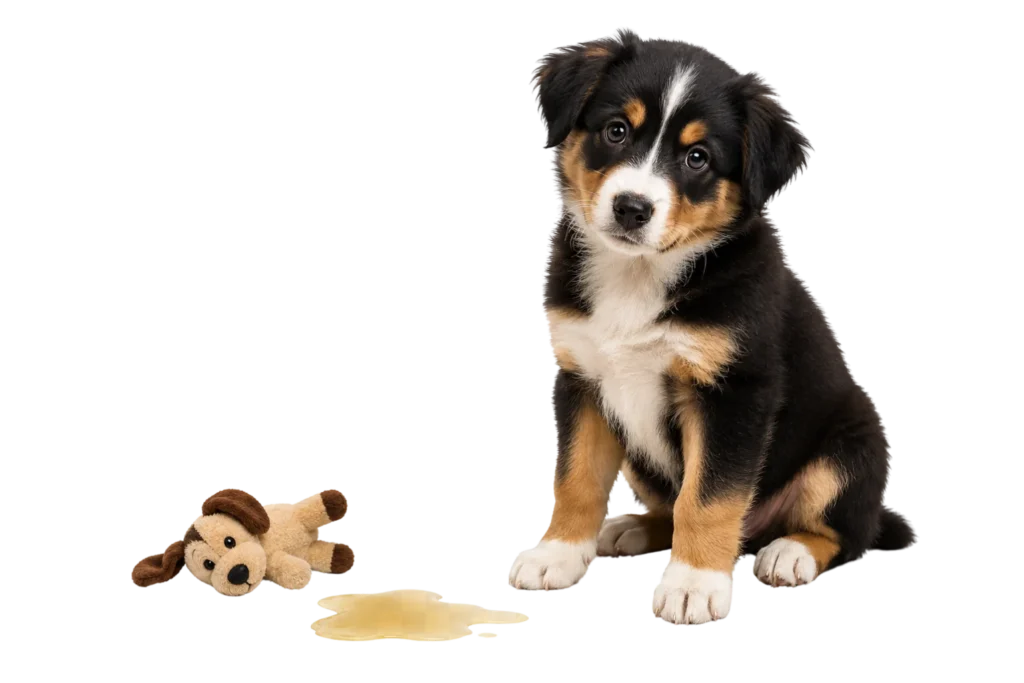
First, What’s Actually Going Wrong?
Before you decide your puppy is hopeless at potty training, it helps to work out what kind of problem you’re dealing with. They can look very similar — usually involving a puddle somewhere you really didn’t want one! — but the reason behind them may be quite different.
Your puppy is still learning. If your puppy has never been reliably clean indoors, it may simply be that the training hasn’t clicked yet. Too much freedom, missed potty breaks, distractions outside or expecting too much too soon can all play a part.
And remember, young puppies are still learning both where you want them to go and how to wait until they get there.
Something in the routine isn’t working. Perhaps your puppy keeps using the same spot, spends ages outside and then pees the moment you come back in, or has accidents whenever you aren’t watching. These are the kinds of problems where a few changes to your routine or management can make a big difference.
Things were going well, but the accidents have started again. That’s different. If your puppy really was making reliable progress and suddenly seems to have gone backwards, you may be dealing with a setback or potty training regression. Going back to basics can help, but a sudden or unusual change is also something we’ll look at more carefully.
If what you really need is the complete process from day one, start with my guide to house training a puppy. Otherwise, stick with me and let’s work out what’s going wrong.
Puppy Keeps Peeing or Pooping in the House
If your puppy is having accidents all over the house, take a look at how much freedom she has. It’s very easy to give a puppy the run of several rooms before she’s actually ready for it.
For now, give her a little less freedom around the house.
That doesn’t mean shutting her in a crate all day. Use a crate or puppy-safe small area when you genuinely can’t supervise her, and barriers or closed doors to keep her close when you can. The aim is simply to know what she’s doing so you can spot the signs and get her outside before an accident happens.
I usually keep my puppy with me in the kitchen. If I need to spend time in another room, I take her out to potty first and then bring her with me, keeping her confined to the room I’m in. If I can’t supervise her properly, that’s when I use the crate.
As your puppy becomes more reliable, you can gradually give her more freedom around the house. But if accidents start happening again, that’s a good sign that you may have given her a little too much freedom, a little too soon.
Why Does My Puppy Keep Peeing in the Same Spot?
Does your puppy seem to have chosen one particular corner of the carpet as her own personal bathroom?
Once a puppy has had an accident somewhere, simply wiping it up may not be enough. Traces of urine odor can remain even when the area looks and smells perfectly clean to you, and that can encourage her to return to the same place again.
Clean the area thoroughly with an appropriate enzymatic cleaner designed for pet urine, following the product instructions. Then, while you’re getting potty training back on track, limit your puppy’s access to that spot unless you can supervise her.
And take another look at why she was able to get there and have the accident in the first place. If she keeps disappearing into the same room or corner unnoticed, cleaning the carpet is only half the solution — closer supervision and a little less freedom may be needed too.
If there have been accidents in several places around the house, don’t worry. We’ll look at how to clean up the old problem areas and give potty training a proper reset below.
Puppy Goes Outside — Then Pees Inside
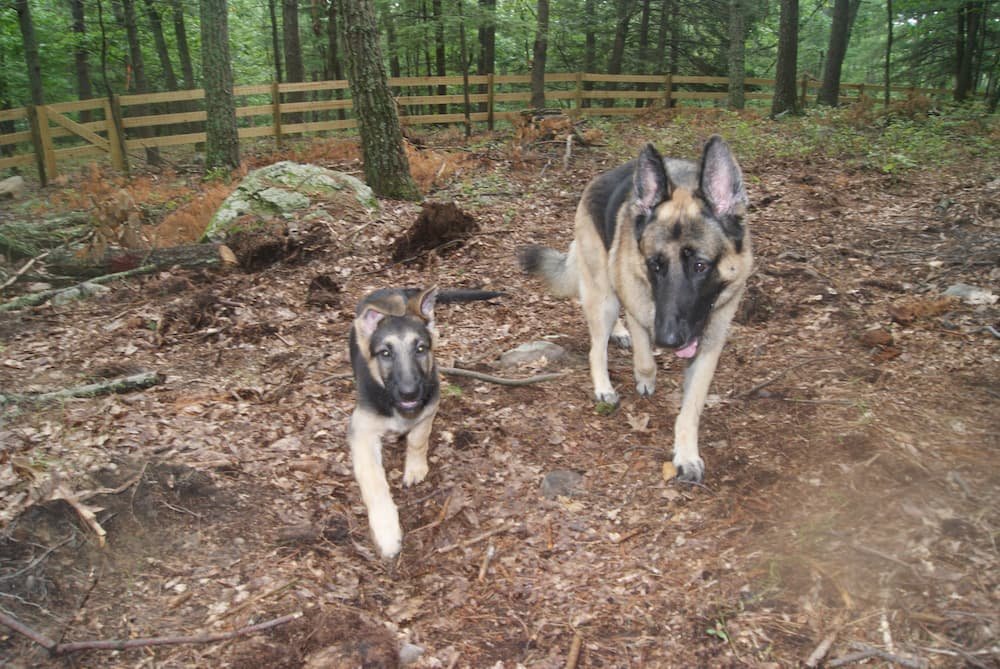
Do you spend ages outside waiting for your puppy to go potty, only to find she does it almost as soon as you come back indoors?
Yes, I’ve been there! Ava would spend her time outside playing with my other dog and having such a good time that going potty seemed to completely slip her mind.
What worked for me was separating play time from potty time. After she’d had a chance to play, I’d bring her back inside and then take her out again on her own specifically to potty. With no other dog to distract her, she could concentrate on the job at hand.
If your puppy still doesn’t go, bring her back inside but keep her closely supervised. You can tether her to you or use her crate for a short period if she’s comfortable there, then take her straight back outside and try again.
Keep repeating the process until she goes in the right place. Then make sure she knows she got it right — praise her and give her a treat.
The important bit is not to give her the opportunity to wander off indoors and have the accident you were trying to prevent in the first place.
When It’s Time to Reset Your Puppy’s Potty Training
Have you followed the usual potty training advice, only to find that it just isn’t working for your puppy?
Don’t despair. If there have already been lots of accidents around the house, sometimes the best thing you can do is stop trying to patch the problem and start again. I like to think of it as hitting the reset button.
I found myself in exactly this situation with Ava after she developed a urinary tract infection. She was peeing in just about every room in the house.
Of course, potty training wasn’t the priority at that point — getting her medical help was.
But once the UTI had been treated, I was left with a puppy who’d had accidents all over the house and potty training that had gone badly off track. So I had two jobs: deal with the aftermath of all those accidents and get Ava back into good potty-training habits.
That’s when I decided to hit the reset button and start again.
Here’s how I approached the reset:
Clean up previous accident areas thoroughly.
Start by cleaning anywhere your puppy has peed or pooped indoors with an appropriate enzymatic cleaner. The aim is to remove the lingering odor rather than simply make the area look clean.Take away some freedom for now.
Keep your puppy in the same room as you so you can supervise closely and get her outside before an accident happens. If you can’t watch her, use a suitable crate or puppy-safe confined area.My house is completely open plan, so I used crates and barriers to section it off. You don’t necessarily need to buy lots of gates either — I used whatever worked safely to stop Ava wandering into parts of the house where I couldn’t keep an eye on her.
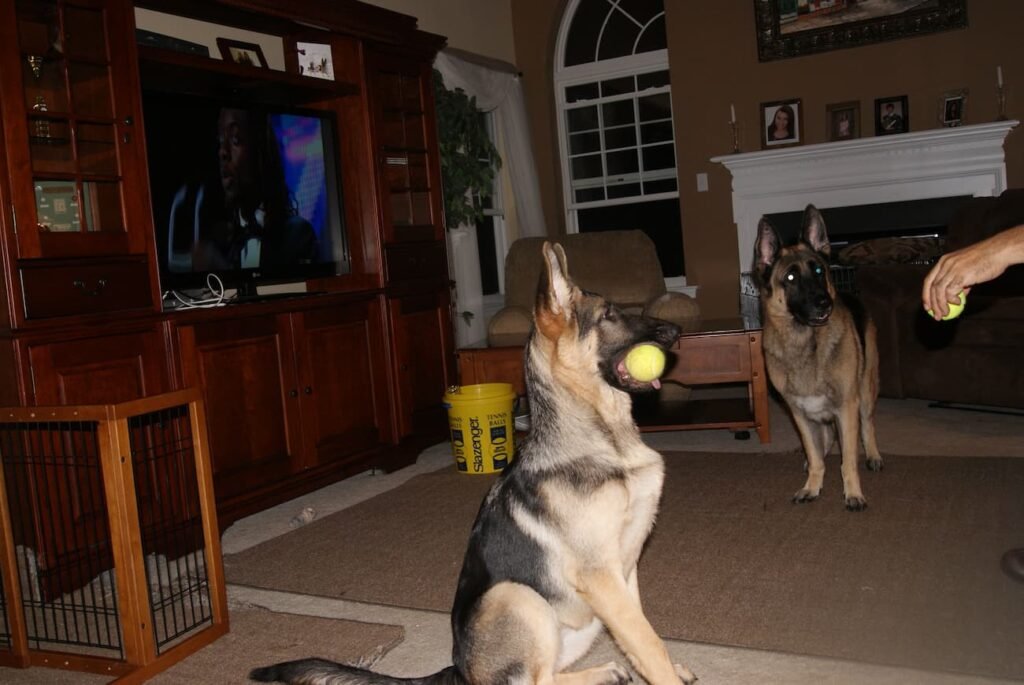
- Change the problem environment if you can.
In our family room, Ava had already had several accidents on the main area rug. After thoroughly cleaning it, I covered it temporarily with a couple of inexpensive carpet remnants.This certainly isn’t something every puppy needs! It was simply a practical solution that worked in my house while we got ourselves back on track. The remnants cost very little, protected the rug underneath and helped me manage the area while I concentrated on retraining her. - Go right back to the potty-training basics.
Once I’d cleaned up the old accident areas and made Ava’s environment easier to manage, I started the training process again from the beginning.If you need a refresher on the complete method, follow my step-by-step guide to house training a puppy. There’s no need to reproduce the whole process here — the important thing during a reset is to tighten up supervision and consistently reinforce the right potty habits again.
Is It Potty Training Regression — or Something Else?
If your puppy has never been reliably potty trained, a few steps backwards probably aren’t really a regression. She may simply still be learning, or something in the routine needs adjusting.
But if she was doing well and suddenly starts having accidents again, pay a little more attention to what has changed.
Sometimes going back to basics — closer supervision, less freedom and more opportunities to potty outside — is all that’s needed. But don’t automatically assume a sudden change is a training problem.
As you saw with Ava, her sudden accidents weren’t a training failure at all — she had a urinary tract infection.
So if your puppy suddenly starts having frequent or unusual accidents, or you notice things such as straining to pee, passing very small amounts frequently, blood in the urine or signs that she’s uncomfortable, call your veterinarian. If she is repeatedly trying to urinate but little or no urine is coming out, seek veterinary care promptly.
And if something simply seems wrong to you, it’s worth getting veterinary advice rather than trying to train your way through a medical problem.
Once a medical problem has been treated or ruled out, you can concentrate on getting the potty-training routine back on track.
What Not to Do When Your Puppy Has an Accident
When you’ve just discovered yet another puddle on the floor, I know it can be frustrating. But however fed up you are, punishment isn’t going to help your puppy understand where you do want her to go.
Don’t rub her nose in an accident, hit her, yell at her or frighten her. Punishing a puppy after you discover a mess won’t teach her what she should have done instead.
Even if you catch her in the act, don’t turn it into a frightening experience. Calmly interrupt her if you can and take her outside to finish.
The last thing you want is for your puppy to become worried about going to the bathroom when you’re nearby. That can make potty training harder if she starts looking for somewhere out of sight instead — behind furniture, under a table or when you’ve left the room.
If accidents keep happening, take another look at what might be going wrong. Are you supervising her closely enough? Is she getting outside often enough? Does she have too much freedom around the house, or does she simply not understand what you’re asking of her yet?
Then reward the behavior you do want when she gets it right.
Potty training problems can be incredibly frustrating, especially when you feel as though you’re doing everything right and still finding puddles on the floor.
But an accident doesn’t mean you’ve failed. Look at what your puppy is telling you, tighten things up where you need to, and don’t be afraid to hit that reset button and start again. I’ve had to do it myself with Ava — and we got there.