
Puppy Feeding Schedule
A Simple Feeding Routine From Puppyhood to Adulthood
Bringing home a puppy comes with plenty of excitement — and a fair bit of chaos! A good puppy feeding schedule gives you one less thing to figure out. See how often to feed your puppy as they grow, with practical meal times and guidance on when their feeding routine should change.
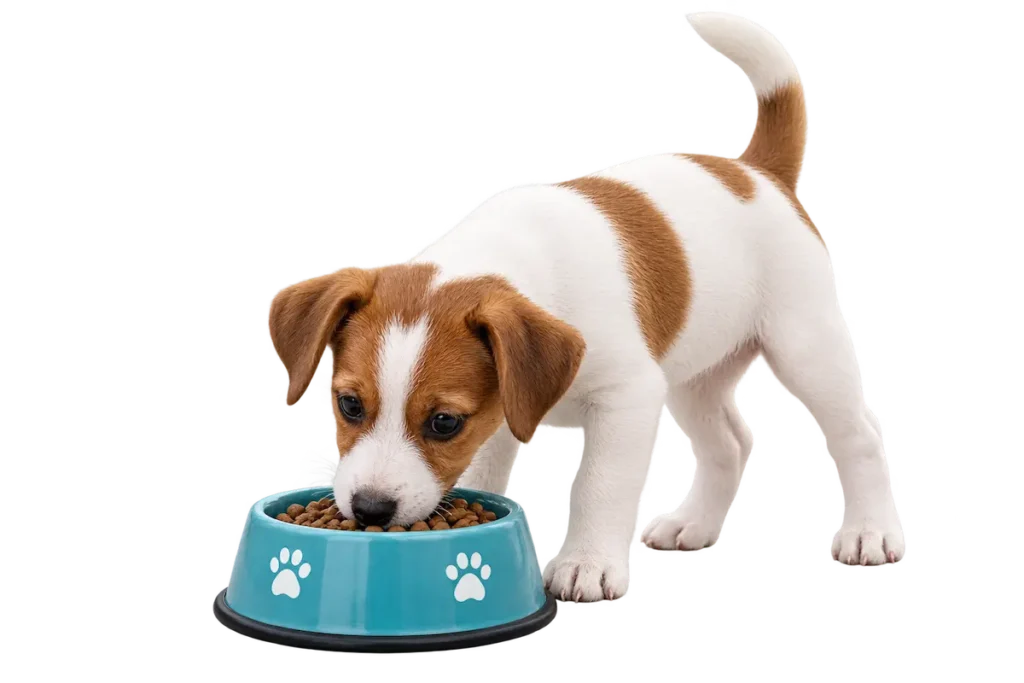
Puppy Feeding Schedule
Puppies need several small meals spread throughout the day, but that number gradually drops as they grow. Use this puppy feeding schedule as a general starting point, then adjust it with your vet if your puppy’s size, growth, health or individual needs call for something different.
| Puppy age | Meals per day | Example feeding times |
|---|---|---|
| 6–12 weeks | 4 | 7 am, 11 am, 3 pm, 7 pm |
| 3–6 months | 3 | 7 am, 1 pm, 7 pm |
| 6–12 months | 2 | 7 am and 6 pm |
The times don’t need to be exact. What matters more is creating a regular routine that works for you and your puppy.
Very small toy-breed puppies may need smaller, more frequent meals, while the right time to reduce meals can vary between individual puppies. If you’re unsure — particularly with a very small puppy, a large or giant breed, or a puppy with health or growth concerns — ask your veterinarian for an individual feeding plan.
How Often You Feed Isn't the Same as How Much
The schedule above tells you how many times a day to feed your puppy — not how much food they need in total. Work out your puppy’s daily food allowance, then divide that amount between their meals.
So, if your puppy needs three meals a day, each meal should contain roughly one-third of their daily allowance — not a full day’s portion three times over!
Puppy Food Calculator
Use this calculator to estimate your puppy’s daily calorie needs. If you know how many calories are in one cup of your puppy food, you can also get an estimated amount to feed each day and at each meal. You’ll usually find the kcal-per-cup figure on the food packaging.
Estimated Daily Starting Amount
Estimated daily calorie need:
Starting food estimate:
Starting amount per meal:
Feeding Puppies Under 8 Weeks Old
If you’re bringing home a puppy at around eight weeks old, the weaning process will usually already be complete. But if you’re caring for a younger puppy — especially an orphaned one — feeding needs are very different.
Puppies normally begin transitioning from their mother’s milk to puppy food at around 3–4 weeks of age. Softened puppy food can be introduced gradually, with the amount of liquid reduced as they become comfortable eating solid food.
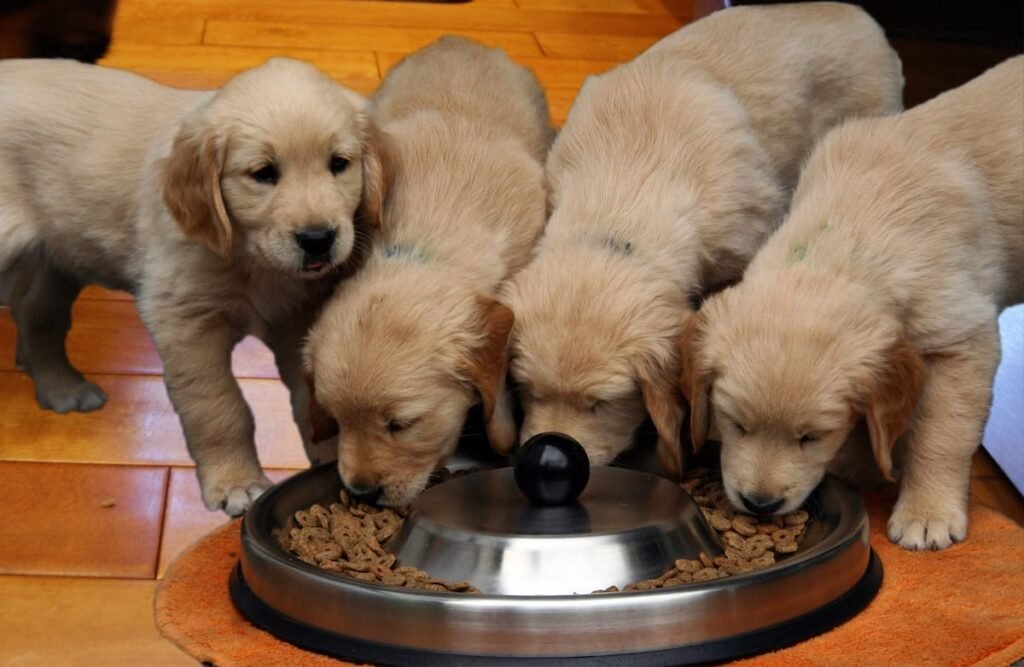
If you’re hand-rearing an orphaned puppy, don’t simply substitute cow’s or goat’s milk. A commercial puppy milk replacer is formulated for a young puppy’s nutritional needs, and very young puppies require much more intensive care than simply providing meals.
Because neonatal puppies can become seriously ill very quickly, it’s a good idea to involve your veterinarian from the start if you’re caring for a puppy that has lost its mother or isn’t nursing normally.
What Time Should You Feed Your Puppy?
You don’t need to feed your puppy at precisely 7:00 am every morning, but a reasonably consistent routine makes life easier for both of you.
Space meals throughout the day rather than bunching them together. For a puppy eating three meals, that might mean breakfast in the morning, lunch around midday and dinner in the early evening. Four meals can be divided more evenly across the day.
A regular feeding schedule also makes toilet trips a little more predictable — something you’ll appreciate when you’re standing outside in your slippers waiting for your puppy to get down to business!
Try not to make the final meal too late in the evening. Give your puppy enough time to eat, digest and have another toilet break before everyone settles down for the night.
Does Breed Size Change a Puppy's Feeding Schedule?
The schedule above is a useful starting point, but puppies don’t all grow at the same rate. A tiny toy puppy and a future 150-pound giant breed have very different nutritional considerations, so size does matter — just not quite as simply as giving every breed its own rigid timetable.
Toy and Small Breed Puppies
Toy and small breed puppies have tiny stomachs but relatively high energy needs, so younger puppies may do better with small, frequent meals.
Very small toy-breed puppies also deserve extra care because they can be more vulnerable to low blood sugar (hypoglycemia), particularly when they’re very young. If your puppy is unusually sleepy or weak, trembling, unsteady, confused, or isn’t eating normally, contact your veterinarian promptly rather than simply trying to adjust the feeding schedule yourself.
As your puppy grows, you can gradually reduce the number of meals according to their individual needs and your veterinarian’s advice.
Large and Giant Breed Puppies
With a large or giant breed puppy, the goal isn’t to make them grow as quickly as possible. Steady, controlled growth is much more important.
Choose a complete and balanced puppy food formulated for the growth of large-size dogs, and pay particular attention to appropriate calorie intake and mineral balance, including calcium. Overfeeding can encourage excessively rapid growth and isn’t good for developing bones and joints.
Large and giant breed puppies may also benefit from smaller, more frequent meals for longer than the general schedule above suggests, so ask your veterinarian when it’s appropriate to reduce their meal frequency.
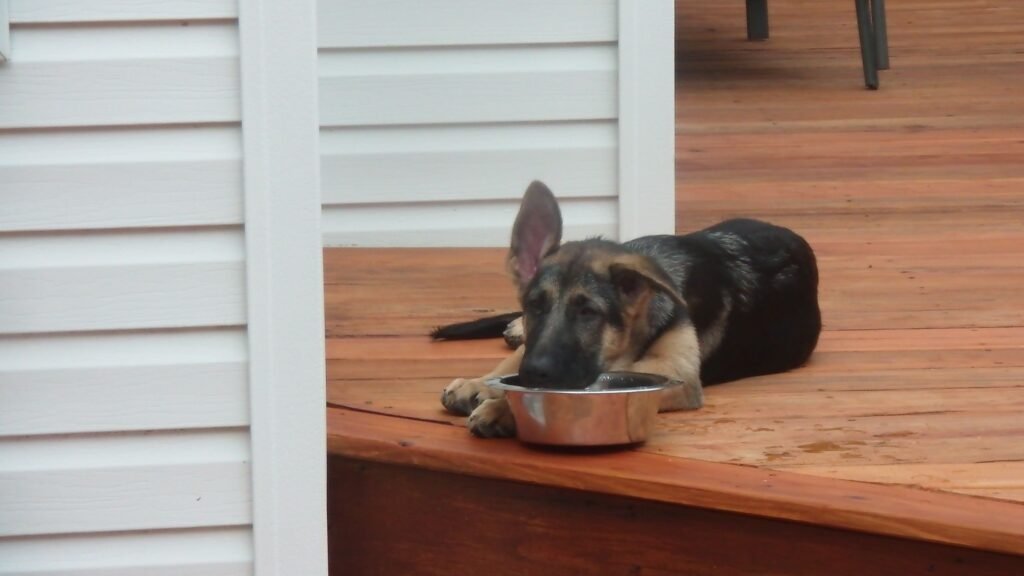
This is one area where I’d resist those soulful, pleading puppy eyes! More food isn’t necessarily better, however convincing your puppy may be.
Large and giant breeds also take longer to reach adulthood, so don’t rush the switch to adult food. Your veterinarian can help you judge when your individual dog has reached the right stage.
When Should You Switch From Puppy Food to Adult Food?
There isn’t one magic age when every puppy should switch to adult food. The right time depends largely on when your dog reaches maturity — and smaller dogs generally get there sooner than larger breeds.
As a general guide, smaller dogs mature sooner and may be ready for adult food before larger breeds, while large and especially giant breeds can take considerably longer to reach maturity.
Don’t rush the change simply because your puppy looks almost fully grown. Puppy foods are formulated to support growth, and your veterinarian can help you decide when your individual dog is ready to make the switch.
When the time comes, change foods gradually rather than overnight. Mixing increasing amounts of the new food with decreasing amounts of the old food over several days can help avoid an upset stomach.
Is Your Puppy Getting the Right Amount of Food?
A feeding chart or calculator can give you a useful starting point, but your puppy is the best guide to whether that amount needs adjusting.
Keep an eye on their growth and weight as the weeks go by, as well as their overall body condition. You should generally be able to feel the ribs without having to press through a thick layer of fat, and your puppy should have a visible waist when viewed from above.
Our puppy weight chart can help you understand how puppy growth typically progresses.
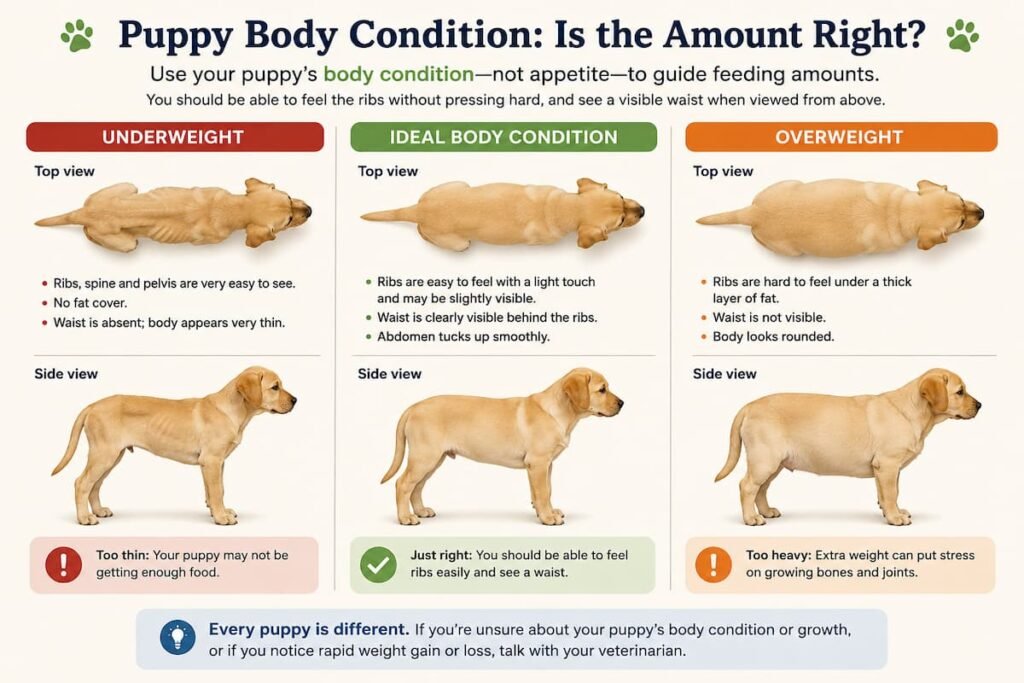
Don’t rely on appetite alone. Plenty of perfectly well-fed puppies will happily assure you they’re starving five minutes after dinner!
If your puppy is gaining weight too quickly or slowly, seems unusually hungry or uninterested in food, or you’re unsure about their body condition, talk to your veterinarian before making major changes to their diet.
Don’t forget the training treats! Puppies can get through quite a few rewards while they’re learning the ropes, and those calories count too. If you’re doing lots of food-based training, factor the treats into your puppy’s overall daily intake rather than simply adding them on top.
A Puppy Feeding Schedule That Grows With Them
Your puppy’s feeding routine will change surprisingly quickly during that first year. Start with several small, regular meals, reduce the number gradually as your puppy grows, and use their body condition — not those pleading eyes — to help judge whether the amount is right.
The schedules and calculator on this page are useful starting points, but every puppy is an individual. Keep an eye on growth, adjust when needed, and ask your veterinarian for advice if something doesn’t seem quite right.
And enjoy this stage while it lasts. Between the chewed shoes, midnight toilet trips and seemingly endless appetite, puppies have a habit of growing up far too quickly.
There’s plenty more to learn along the way, so head over to our puppy information and care guide for help with the rest of puppyhood.