
Excessive Dog Shedding: What's Normal & When to Worry
Is all that fur normal — or is your dog trying to tell you something?
Finding dog hair on your clothes, carpets and just about everywhere else is part of living with a dog. But if your dog suddenly seems to be shedding much more than usual, it’s worth paying attention. Here’s how to tell normal shedding from changes that may need a closer look.
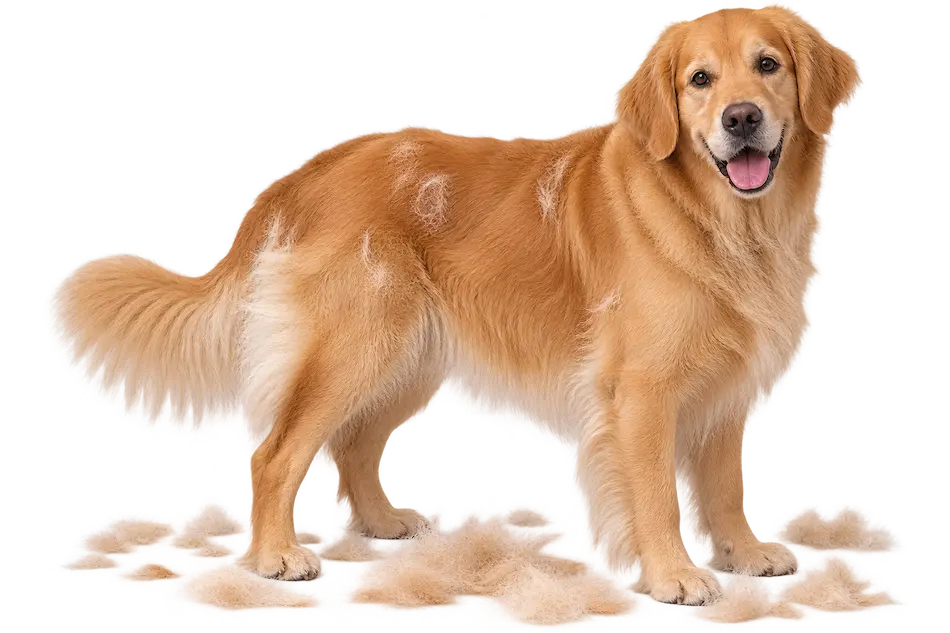
Is Your Dog's Shedding Normal?
There isn’t a magic amount of dog hair that suddenly counts as “too much.” What matters more is what’s normal for your dog. A double-coated dog blowing their coat can produce an astonishing amount of fur and still be perfectly normal, while an unusual change in another dog’s coat may deserve a closer look.
🎯 More Likely Normal
- Shedding follows your dog’s usual seasonal pattern.
The coat is still full and the skin looks healthy.
There are no bald or noticeably thinning patches.
Your dog isn’t unusually itchy or uncomfortable.
Your dog otherwise seems their normal self.
🔍 Worth Investigating
Shedding has suddenly increased for no obvious reason.
You can see bald or noticeably thinning areas.
Your dog is persistently scratching or seems uncomfortable.
The skin looks red, inflamed, sore or otherwise abnormal.
Increased shedding appears alongside other unexplained changes in your dog’s health or behavior.
If something has clearly changed—particularly if the shedding comes with bald patches, itching or abnormal-looking skin—it’s worth talking to your veterinarian rather than assuming your dog simply needs more brushing.
Seasonal Shedding: When More Hair Can Be Normal
Many dogs naturally shed more at certain times of year, particularly as their coats adjust to changes in temperature and daylight. During these periods, you may notice considerably more loose hair around your home even though your dog’s skin and coat still look healthy.
Seasonal shedding tends to be more noticeable in dogs with double coats, although indoor dogs may shed more steadily throughout the year because artificial lighting and controlled temperatures can blur the usual seasonal pattern.
✓ Signs It’s Probably Normal
Your dog’s skin looks healthy, there are no bald patches or obvious irritation, and they’re otherwise behaving normally. Even a surprising amount of loose hair can simply be part of their normal shedding cycle.
What matters most is whether the shedding is normal for your dog. A sudden change from their usual pattern—or shedding accompanied by other skin or health changes—is more useful information than the amount of hair alone.
When Dogs “Blow” Their Coat
Dogs with double coats can sometimes shed so dramatically that it looks anything but normal. This is often called “blowing the coat.”
Breeds such as German Shepherds, Siberian Huskies and Bernese Mountain Dogs have a softer, dense undercoat beneath the longer outer coat. As the seasons change, large amounts of that undercoat can loosen at once.
That means you may find clumps of fur coming away during brushing or appearing around your home. It can look alarming, but for a healthy double-coated dog this can simply be normal coat turnover rather than excessive shedding caused by a health problem.
Regular brushing during these heavy shedding periods helps remove loose undercoat before it ends up all over your furniture and clothes.
🐕 A Lot of Hair Can Still Be Normal
If your dog is shedding heavily but the coat remains even, the skin looks healthy and there are no bald areas, itching or other changes, the amount of loose fur alone isn’t necessarily a reason to worry.
Do “Non-Shedding” Dogs Shed?
You may have heard breeds such as Poodles, Bichon Frises and Maltese described as dogs that don’t shed, but that’s not quite accurate. All dogs shed to some degree — some simply shed much less noticeably than others.
With dense or curly coats, loose hairs can become trapped among the surrounding hair instead of falling onto your floors, furniture and clothes. That’s one reason these coats can be prone to matting and usually need regular brushing, grooming and trimming.
So if you occasionally find loose hair from a supposedly “non-shedding” dog, don’t panic. A little shedding doesn’t automatically mean something is wrong.
When Excessive Dog Shedding May Be a Problem
Heavy shedding becomes more concerning when it’s a change from what’s normal for your dog, particularly when you notice changes in their skin, coat or general health at the same time.
Look beyond the amount of hair you’re finding and check your dog for other signs that something may be going on.
🔍 Bald or Thinning Areas
Shedding that leaves noticeably thin areas or patches of exposed skin is different from the more even loss of loose hair you would expect with normal shedding.
🐾 Persistent Itching or Scratching
Frequent scratching, licking or chewing alongside increased hair loss may point toward an underlying skin problem rather than ordinary coat turnover.
🔎 Red, Sore or Abnormal Skin
Look for redness, inflammation, sores, scabs or other obvious changes to the skin beneath the coat.
🐕 Other Changes in Your Dog
Pay attention if increased shedding appears alongside other unexplained changes in your dog’s health or behavior. Those additional clues are worth mentioning to your veterinarian.
If your dog’s shedding has changed significantly and you’re seeing any of these signs, contact your veterinarian rather than simply trying stronger grooming or de-shedding products. The aim is to find out why the coat is changing and address the underlying cause.
What Can Cause Excessive Dog Shedding?
There are several reasons a dog may start shedding more than usual. Some are temporary and relatively harmless, while others involve the skin, coat or an underlying health problem.
The clues that come with the shedding — such as itching, skin changes, stress or other changes in your dog’s health — can help narrow down what may be worth investigating.
🐾 Allergies, Irritation & Parasites
Allergies, fleas, mites and other sources of skin irritation can lead to increased scratching, licking or chewing, which may contribute to hair loss or make shedding appear much worse. Redness, irritated skin or bald patches make this more concerning than normal coat turnover.
🦠 Skin Infections
Bacterial, yeast or other skin infections can affect the coat as well as the skin underneath it. Increased shedding or hair loss may appear alongside redness, odor, sores, crusting or other visible skin changes.
🧠 Stress & Environmental Changes
Some dogs may shed noticeably more during stressful situations such as moving home, travel or other changes to their routine. If the shedding begins around a stressful event and your dog otherwise appears healthy, it may be temporary — but persistent or unexplained changes are still worth discussing with your veterinarian.
🩺 Nutrition & Health Conditions
Healthy skin and coat depend partly on appropriate nutrition, but diet isn’t the only explanation for excessive shedding. Hormonal or other medical conditions can also affect the coat, particularly when shedding is accompanied by changes elsewhere in your dog’s health.
Because several very different problems can produce similar coat changes, the shedding itself usually doesn’t tell you the cause. Look at the whole picture — your dog’s skin, coat, behavior and any other changes — rather than trying to diagnose the problem from the amount of loose hair alone.
How to Manage Normal Heavy Shedding
If your dog’s skin and coat look healthy and the extra hair appears to be normal seasonal or coat-related shedding, you may not be able to stop the shedding — but you can make all that loose fur much easier to manage.
🪮 Brush Regularly
Regular brushing removes loose hair before it ends up around your home. During a heavy seasonal shed, double-coated dogs may need more frequent brushing to work through the loose undercoat.
🛁 Bathe & Groom
Bathing and grooming can help loosen dead hair so it can be brushed out more easily. Choose products and grooming methods appropriate for your dog’s particular coat and skin.
🐕 Keep an Eye on the Coat
As you groom, take the opportunity to check the skin underneath. An even, healthy-looking coat is reassuring; new bald areas, redness, sores or persistent itching deserve more attention.
Grooming Helps With Hair — Not the Underlying Cause
If shedding appears abnormal or is accompanied by skin or health changes, simply brushing more or using stronger de-shedding products isn’t the answer. The underlying reason for the coat change needs to be addressed.
Can Diet Affect Your Dog’s Shedding?
Good nutrition supports healthy skin and coat, so diet can be part of the picture when you’re trying to understand changes in your dog’s fur. But increased shedding doesn’t automatically mean your dog is missing a particular nutrient.
Dogs eating a complete and balanced diet should already be receiving the nutrients they need for normal skin and coat health. If you’re concerned about your dog’s diet or think a nutritional problem could be contributing to coat changes, talk to your veterinarian before adding supplements.
🐟 What About Fish Oil?
Fish oil provides omega-3 fatty acids and may be recommended for some dogs, but that doesn’t mean every dog that sheds heavily needs a supplement. The appropriate amount can also depend on the individual dog and their existing diet, so it’s worth discussing supplementation with your veterinarian first.
Can Stress Cause Excessive Shedding?
Yes, some dogs may shed noticeably more when they’re stressed. You might notice an increase during or after situations such as moving to a new home, travelling, changes in routine or other unfamiliar experiences.
If the extra shedding appears around a stressful event and your dog’s skin and coat otherwise look healthy, it may be temporary. Pay attention to their behavior as well as their coat and consider whether anything in their environment or routine has recently changed.
However, don’t automatically assume stress is the cause of persistent or unexplained shedding, particularly if you also notice itching, bald areas, skin changes or other changes in your dog’s health.
🐕 Look at What Changed
Sometimes the timing gives you a useful clue. Think about whether the shedding began after a change in your dog’s home, routine or environment — but treat that as something to observe rather than proof of the cause.
When to See Your Veterinarian About Excessive Shedding
You don’t need to call your veterinarian simply because there’s suddenly more dog hair on the sofa. Seasonal changes and coat type can produce an impressive amount of perfectly normal shedding.
But if the shedding represents a significant change for your dog, particularly when something else has changed too, it’s worth getting veterinary advice.
☎️ Contact Your Veterinarian If You Notice:
- bald or noticeably thinning areas
- Persistent scratching, licking or chewing
- Red, inflamed or irritated skin
- Sores, scabs or other unusual skin changes
- A noticeable deterioration in the condition of the coat
- Increased shedding accompanied by other unexplained changes in your dog’s health or behavior
- Shedding that remains unusually heavy without an obvious seasonal or coat-related explanation
Your veterinarian can look beyond the shedding itself and consider your dog’s skin, coat, general health and history to investigate what may be causing the change. If an underlying problem is responsible, addressing that cause is more important than simply trying to reduce the amount of hair being shed.
Excessive Dog Shedding: The Bottom Line
Finding dog hair everywhere doesn’t necessarily mean something is wrong. Seasonal coat changes, double coats and your individual dog’s normal shedding pattern can all produce a surprising amount of loose fur.
The key is to watch for change. If your dog suddenly starts shedding differently from normal, or the shedding comes with itching, bald patches, abnormal-looking skin or other changes in their health or behavior, that’s when it’s worth investigating rather than simply reaching for another grooming tool.
🐾 Know What’s Normal for Your Dog
Your dog’s usual coat and shedding pattern give you the best point of comparison. Once you know what’s typical for them, you’re much more likely to notice when something genuinely changes.
Need More Dog Skin Help?
If shedding is only one of the changes you’ve noticed, visit our Dog Skin Conditions guide to explore other common skin and coat problems, including itching, irritation, infections and changes in your dog’s skin.
References
Merck Veterinary Manual. Hair Loss (Alopecia) in Dogs.
VCA Animal Hospitals. Coat and Skin Appearance in the Healthy Dog.
VCA Animal Hospitals. Nutrition and Your Dog’s Skin and Haircoat.