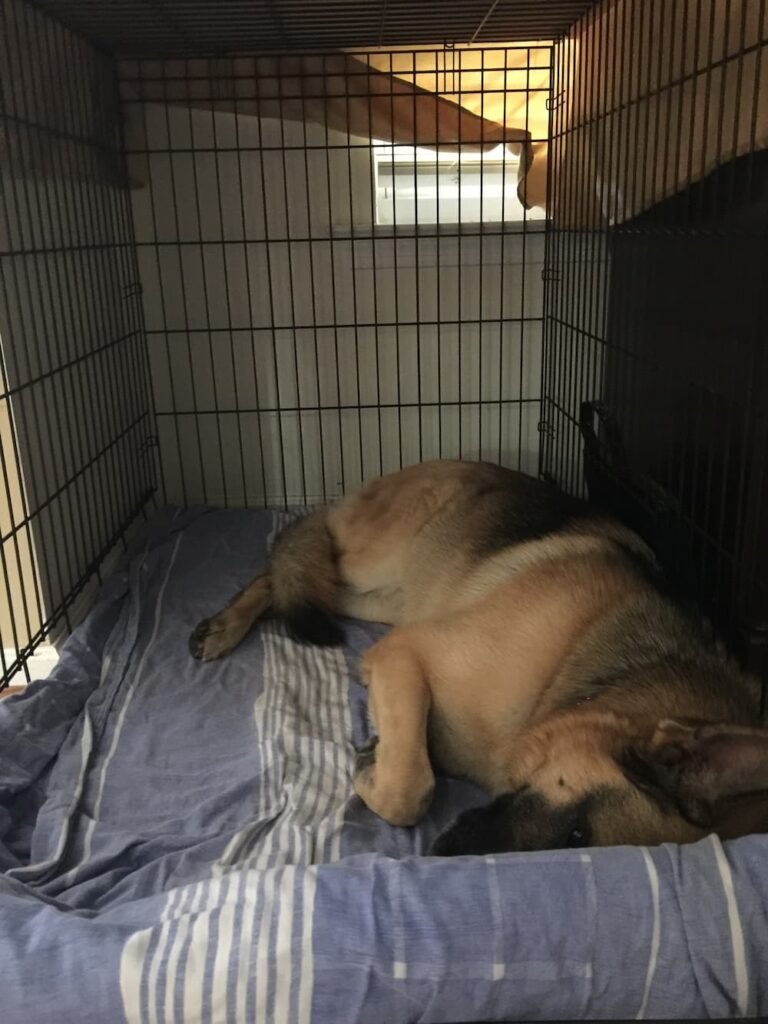
Crate Training a Puppy
A gentle, step-by-step approach to help your puppy love their crate
Crate training doesn’t mean shutting your puppy in a cage and hoping for the best. Done properly, it’s a gradual process that helps your pup feel happy and secure in their crate — and I’ll show you exactly how to get there, one step at a time.
I used to look at dog crates as a sort of punishment. That was until I actually got one and went through the crate training process… properly.
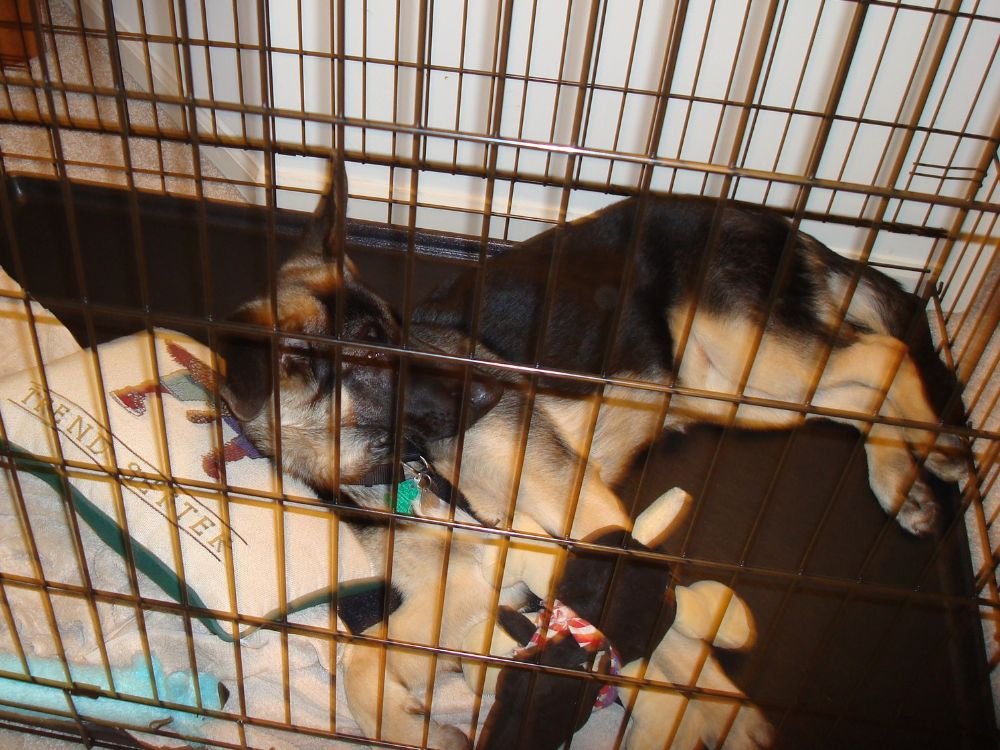
My dog came to love her crate so much that, even when she was long past needing to be shut in one while I was out, I couldn’t take it down. She still chose to go in there to rest — or to hide when it was time for her bath!
That’s really the aim of crate training. You don’t want a puppy who reluctantly puts up with being shut away. You want your pup to learn that their crate is a comfortable, safe place they can happily choose to spend time in.
And the secret to getting there? Don’t rush it.
Benefits of Crate Training a Puppy
Used properly, a crate can make life easier for both you and your puppy. It can:
- Help with potty training.
- Keep your puppy safe when you can’t supervise them.
- Prevent your pup from chewing household items while unsupervised.
- Give your puppy a comfortable place to rest and relax.
- Help your puppy gradually get used to spending appropriate periods alone.
- Make traveling with your dog easier.
- Help your dog become comfortable with temporary confinement, such as during some vet visits, travel or recovery.
- Give your pup somewhere familiar to retreat to when they’re tired or want some peace and quiet.
Is Crate Training a Puppy Cruel?
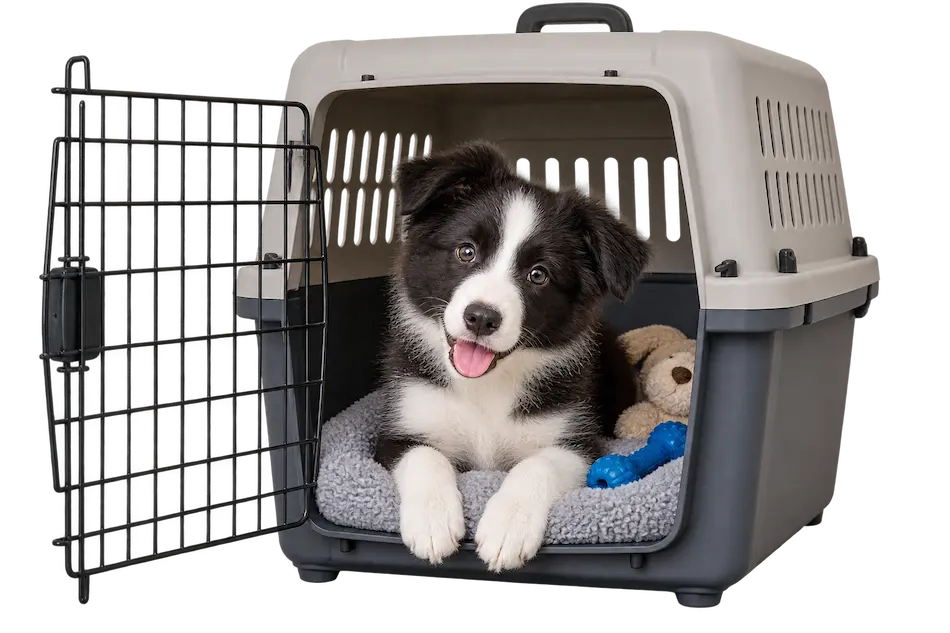
If you’re a bit skeptical about using a crate, I understand — I was too. But there’s a big difference between simply shutting a puppy in a crate and taking the time to teach them to enjoy being there.
Used properly, a crate shouldn’t be a punishment. Your puppy should learn to associate it with good things: treats, meals, toys, rest and feeling comfortable.
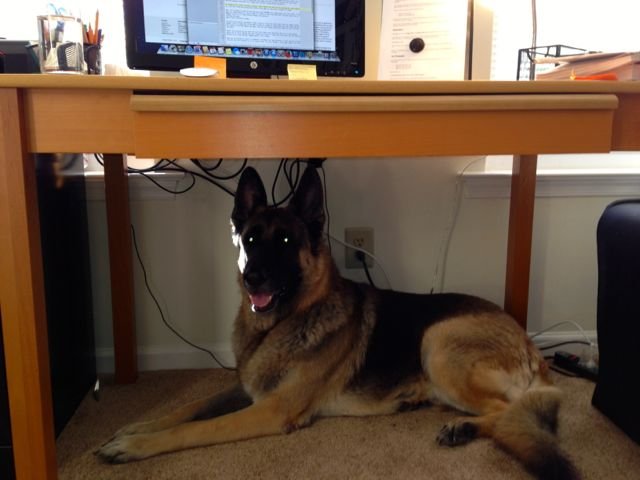
You’ve probably seen a dog squeeze themselves into what looks like the smallest space possible — under a desk or coffee table, behind the sofa or under the bed. Mine certainly do!
A crate can become another comfortable resting place, but the important part is giving your puppy the choice and time to build that positive association.
Choosing the Right Crate for Your Puppy
Before you start training, you’ll need a suitable crate. There are several types to choose from, but whichever style you use, getting the size right is important.
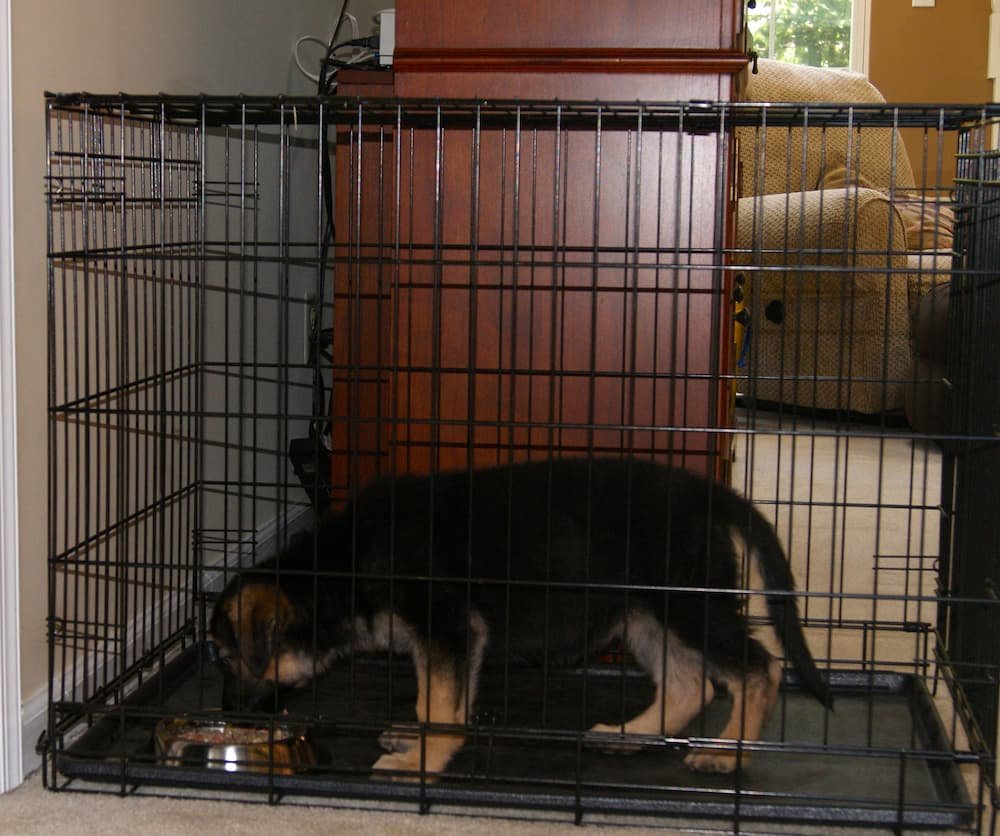
Your puppy should have enough room to stand up, turn around and lie down comfortably.
Bigger isn’t necessarily better, especially while you’re house training. This is one of those times when giving your puppy more space can actually make life harder! Give a young puppy far more room than they need and they may start using one end of the crate as a toilet and the other for sleeping.
If you’re buying a crate that will fit your puppy when they’re fully grown, look for one with a divider. You can give your pup the space they need now and gradually increase it as they grow.
How to Start Crate Training a Puppy
Right, now let’s get started on training your pup to love their crate.
Step 1: Introduce Your Puppy to the Crate
At first, don’t shut your puppy inside. Toss some tasty treats into the crate and let your pup go in and get them. Keep the door open and stand out of the way so they don’t become suspicious or worried about going inside.
Most importantly, be patient. Let your puppy choose to go in rather than putting or pushing them inside.
If your pup doesn’t want to go anywhere near the crate, don’t worry. Start by placing a little trail of treats leading towards it. Once they’re comfortable being close to the crate, you can begin tossing treats just inside.
When your puppy starts going in, let them eat the treats you’ve thrown inside. While they’re still there, drop in a few more.
Repeat this several times until your pup is happily staying inside and waiting to see whether another tasty treat is coming their way.
Then call it a day for that session. There’s no prize for getting through crate training quickly. Short, successful sessions are far better than pushing your puppy until they’re uncomfortable.
Step 2: Encourage Your Puppy to Enter Voluntarily
When you’re ready for another short training session, start with something your puppy already knows. Toss a few treats into the crate and let them go in and get them, just as you did before.
After you’ve done this a couple of times, stop throwing the treats in first.
Now wait.
Give your puppy the chance to go into the crate on their own. Be patient and let them figure it out. You can look towards the crate to draw their attention to it, but don’t say anything yet.
The moment your pup goes inside, make it worthwhile! Drop plenty of treats into the crate and give them lots of praise.
Repeat this several times so your puppy starts to discover that choosing to go into the crate makes good things happen.
Once they’re happily going in without needing a treat thrown in first, you’re ready to start putting a name to the behavior.
Step 3: Add a Crate Command
Now it’s time to give going into the crate a name.
You can use whatever command feels natural to you. I use “in your crate,” but “kennel up,” “place,” “crate” or something else is fine. The important thing is to pick one and be consistent.
Start by waiting for your puppy to go into the crate on their own, just as you did in Step 2.
This time, say your chosen command while your puppy is actually going into the crate — not before and not afterwards. Once they’re inside, reward them generously.
Repeat this several times. You’re helping your pup connect the words you’re saying with the action they’re already performing.
Once they’re making that connection, try saying your command before they enter.
If your puppy goes in, brilliant — reward them with treats and plenty of praise.
If they don’t, don’t keep repeating the command or try to push them inside. Simply go back to the previous stage for a little longer and try again later.
Step 4: Close the Crate Door
Up until now, you haven’t tried to close the crate door with your puppy inside. That’s deliberate. You want your pup to be really happy going into the crate before you add something new.
Start as you did before, asking your puppy to go into the crate and rewarding them.
This time, while they’re still eating their treats, quietly close the door for just a few seconds. Then open it again before they’ve finished eating and let them come out if they want to.
Repeat this a few times.
Once your puppy is completely comfortable with that, begin gradually increasing how long the door stays closed. And I really do mean gradually — we’re talking seconds here, not minutes.
You can drop treats into the crate while the door is closed so your pup continues to associate being inside with good things. At this stage, stay close rather than walking away.
You can also feed your puppy’s meals in the crate. I did this with my own puppy, and it’s another simple way to help them associate the crate with something they already enjoy.
What If Your Puppy Whines When You Close the Door?
If your puppy starts whining as soon as you increase the time, you’ve probably gone a little too quickly. Shorten the next attempt and go back to a duration they were comfortable with.
A brief grumble or bit of protest isn’t necessarily the same as genuine distress, and you don’t want your puppy learning that demand barking instantly opens the door. If you know they’re comfortable and don’t need the toilet, wait for a brief moment of calm before opening it.
But don’t turn that into a rigid “never let a crying puppy out” rule.
Persistent or escalating whining, barking, scratching or attempts to escape can mean your puppy is struggling with the session. Young puppies may also cry because they genuinely need a toilet break. In either case, don’t simply leave them to “cry it out.” Deal with the immediate need and make the next training session easier.
Step 5: Gradually Increase Crate Time
Once your puppy is comfortable with the door being closed for a few seconds, start building up the time little by little.
There’s no need to race towards a particular number of minutes. Add a little more time, see how your pup responds and build from there.
A favorite toy or safe food-filled toy can give your puppy something enjoyable to do while they’re inside. You’re aiming for a pup who can settle in the crate rather than one who’s sitting there anxiously waiting for the door to open.
As a rough guide, once your puppy can happily spend around a minute in the crate with the door closed while you’re nearby, you can start introducing the next step.
Watch your puppy, not just the clock. If they’re relaxed at the current stage, you can try making things a little harder. If they become worried or increasingly restless, make the next session easier and build up more slowly.
Step 6: Leave the Room Briefly
Once your puppy is relaxed in the crate with the door closed while you’re nearby, it’s time to start disappearing from view.
Again, start ridiculously slowly.
The first time, leave the room for just one second, then come straight back. Next time you might try two seconds, then three or four.
You don’t have to increase the time with every attempt. If your pup is comfortable, build it up gradually. If they start becoming worried when you’re out of sight, shorten the time again and work from the last point where they were happy.
As the time increases, leave your puppy with something safe and enjoyable to occupy them.
The aim isn’t to see how long your puppy will put up with being alone. You’re teaching them, little by little, that you disappearing isn’t a big deal — you always come back.
Once your puppy can relax in the crate with you out of the room — perhaps for around 10 minutes — you can begin practicing very short trips outside the house.
Step 7: Practice Leaving the House
Once your puppy is comfortable with you being out of the room, you can start practicing actually leaving the house.
For the first attempt, make it really short. You don’t even have to go anywhere — wait outside for a minute or walk around the house and come straight back in.
From there, gradually increase how long you’re gone — but, as with every other stage of crate training, let your puppy’s behavior tell you whether you’re moving at the right pace.
Don’t suddenly jump from a few minutes to a long absence just because the first attempt went well.
Young puppies also need frequent toilet breaks and shouldn’t be expected to stay in a crate longer than they’re physically able to cope with. Age, housetraining progress and the individual puppy all matter.
For more detailed guidance on puppy toilet needs and housetraining, see my House Training a Puppy guide.
And remember, a crate isn’t somewhere your puppy should spend most of the day. They need plenty of time outside it for toilet breaks, exercise, play, training and, of course, time with you.
Crate Training a Puppy at Night
Those first few nights with a new puppy can be… interesting! You’re asking a little pup who’s used to sleeping with their mother and littermates to suddenly settle somewhere completely new, so don’t be surprised if it takes a bit of adjustment.
To begin with, it can help to have the crate in or near your bedroom. Your puppy knows you’re close by, and you’ll also be able to hear when they wake and may genuinely need to go outside.
Young puppies often still need a toilet break during the night. If yours wakes and needs to go, keep the trip outside calm and boring — toilet, quiet praise when they’ve finished, then back to bed. 2 a.m. is definitely not playtime!
If your puppy cries at night, don’t automatically assume they’re just trying to get out of the crate. Think about when they last went to the toilet and what their behavior is telling you.
And if your pup is becoming increasingly distressed rather than settling, don’t simply leave them to cry it out. You may have moved faster than they’re ready for, so go back a stage and work on making the crate a comfortable place during the daytime too.
Once your puppy is sleeping comfortably and reliably in their crate, you can gradually work towards whatever long-term sleeping arrangement you want.
Crate Training Problems: What Is Your Puppy Telling You?
Crate training doesn’t always go perfectly from one step to the next. If your puppy suddenly struggles, don’t assume they’re being stubborn or naughty.
Usually, it’s a sign to stop and work out what they’re trying to tell you.
| What Your Puppy Does | What It May Mean | What To Do |
|---|---|---|
| Won't go into the crate | They're not comfortable with it yet. | Go back to the open-door stage. Use treats or meals and let your puppy choose to enter. Never force them inside. |
| Happy until you close the door | The door has probably been introduced too quickly. | Go back to very brief closures — even a second or two — and build up more slowly. |
| Starts crying after previously settling | They may genuinely need the toilet, especially if they're very young. | Think about when they last went out. If they need a toilet break, keep it calm and return them to the crate afterwards. |
| Whines or barks briefly when you leave | It may be mild protest or uncertainty about this new step. | Make the next absence shorter. If their needs are met and they're otherwise relaxed, avoid teaching them that routine demand barking immediately opens the door. |
| Crying or escape attempts become more intense | Your puppy may be genuinely distressed rather than simply protesting. | Stop increasing the difficulty and return to an easier stage. If significant distress continues, speak to your veterinarian or an appropriately qualified behavior professional. |
Crate Training a Puppy: Wrap Up
Crate training a puppy isn’t something to rush. Some pups fly through the early stages, while others need a lot more time — and that’s absolutely fine.
What matters is that your puppy learns, step by step, that the crate is somewhere comfortable and predictable rather than somewhere they’re suddenly shut away.
Both of my dogs were crate trained as puppies. As they got older, they eventually had the complete run of the house when we went out. In fact, they’d watch us getting ready to leave, head off to their beds and that’s where I’d find them when I came home.
The crate had done its job — but it was still somewhere they were perfectly happy to relax.
If you take your time, watch your puppy’s response and go back a step whenever things start to wobble, you’ll give them the best chance of becoming genuinely comfortable with their crate.
Slow and steady really does win this particular race.