
Dog Mange: Symptoms, Types & Treatment
Could Your Dog Have Mange?
Mange is caused by tiny mites that can leave your dog itchy, uncomfortable and losing patches of fur. But not all mange is the same — some types are contagious while others aren’t. Here’s how to spot the signs, understand the differences and know when it’s time to call your vet.

What Are the Different Types of Mange in Dogs?
When we talk about dog mange, we’re actually talking about skin conditions caused by different types of mites. The two main forms are sarcoptic mange (canine scabies) and demodectic mange (demodicosis). You may also hear Cheyletiella, better known as “walking dandruff,” described as a type of mange.
The important bit? They don’t all behave the same way.
| Sarcoptic Mange | Demodectic Mange | Cheyletiella | |
|---|---|---|---|
| Caused by | Sarcoptes mites | Demodex mites | Cheyletiella mites |
| Typical signs | Intense itching, redness, hair loss and crusting | Hair loss and inflamed or scaly skin; itching can vary | Flaky, dandruff-like skin and itching |
| Contagious? | Yes — highly contagious between dogs | No, not in the same way | Yes — spreads between animals |
| Can affect people? | Yes, temporarily | No | Yes, temporarily |
| Vet assessment? | Yes | Yes, particularly generalized disease | Yes |
Think your dog has mange? Itching and hair loss can also be caused by allergies, infections, parasites and other dog skin conditions, so you can’t reliably diagnose mange by appearance alone. Your vet can work out what’s causing the problem and which treatment your dog actually needs.
Sarcoptic Mange (Canine Scabies)
Sarcoptic mange — also known as canine scabies — is caused by Sarcoptes mites that burrow into your dog’s skin. And if you’ve ever seen a dog with a bad case, you’ll know just how miserable that can make them.
One of the biggest clues is sudden, intense itching — the sort that can make a dog absolutely miserable. Your dog may scratch, bite and chew at their skin so much that it becomes red, sore and crusty, with patches of hair loss.
Signs of Sarcoptic Mange
Look out for:
Severe, persistent itching
Red or inflamed skin
Hair loss
Crusts, scabs or sores
Signs that begin around the ears, elbows, hocks, chest or underside of the body
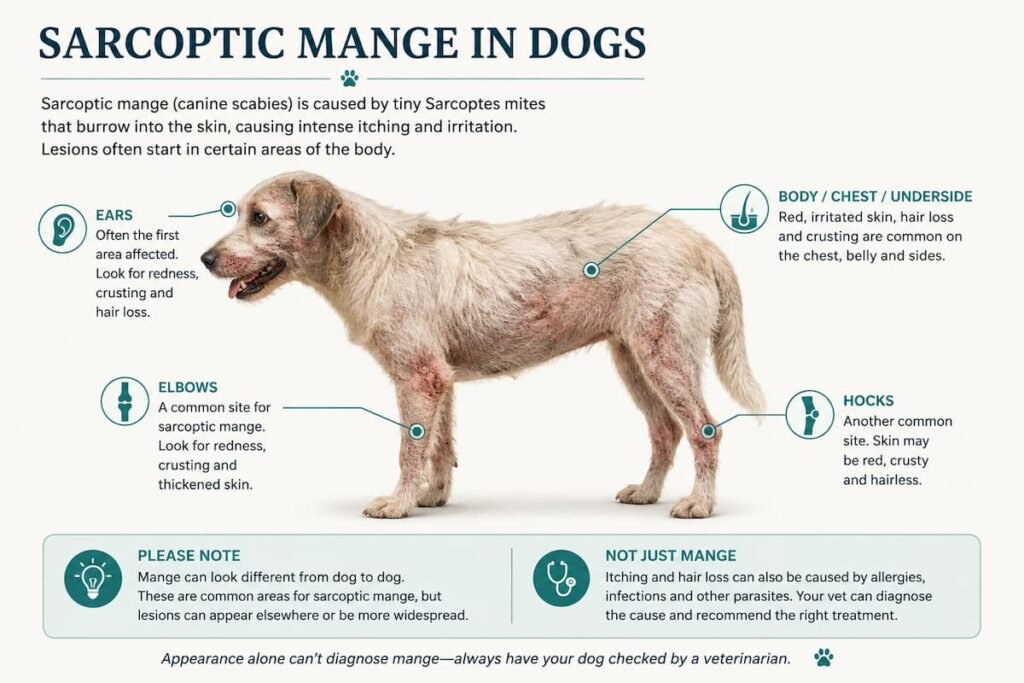
Sarcoptic mange is also highly contagious between dogs, so it’s particularly worth considering if the itching started after your dog spent time around other dogs — for example, at kennels, daycare or another close-contact environment.
It can also cause a temporary itchy skin reaction in people who come into contact with an affected dog. If anyone in your household develops an unexplained itchy rash, speak to your doctor and mention the possible exposure.
Demodectic Mange (Demodicosis)
Demodectic mange is a different beast altogether. It’s caused by an overgrowth of Demodex mites — microscopic mites that normally live in small numbers in a dog’s hair follicles.
Unlike sarcoptic mange, demodectic mange isn’t considered contagious in the same way, so you don’t need to worry about catching it from your dog or it spreading around the household.
Localized Demodectic Mange
Localized demodicosis is most often seen in young dogs and puppies. You may notice one or several small patches of thinning or missing fur, often around the face, especially near the eyes or muzzle.
Mild localized cases in young dogs can resolve as the dog’s immune system matures, but it’s still worth having suspicious patches checked. Hair loss isn’t unique to mange, and your vet can make sure something else isn’t causing it.
Generalized Demodectic Mange
Generalized demodicosis is much more extensive. Larger areas of the body may be affected, with signs including:
- Widespread patches of hair loss
- Red, inflamed or scaly skin
- Crusting and sores
- Itching, particularly if there’s a secondary skin infection
- Pimples, pustules or discharge where infection has developed
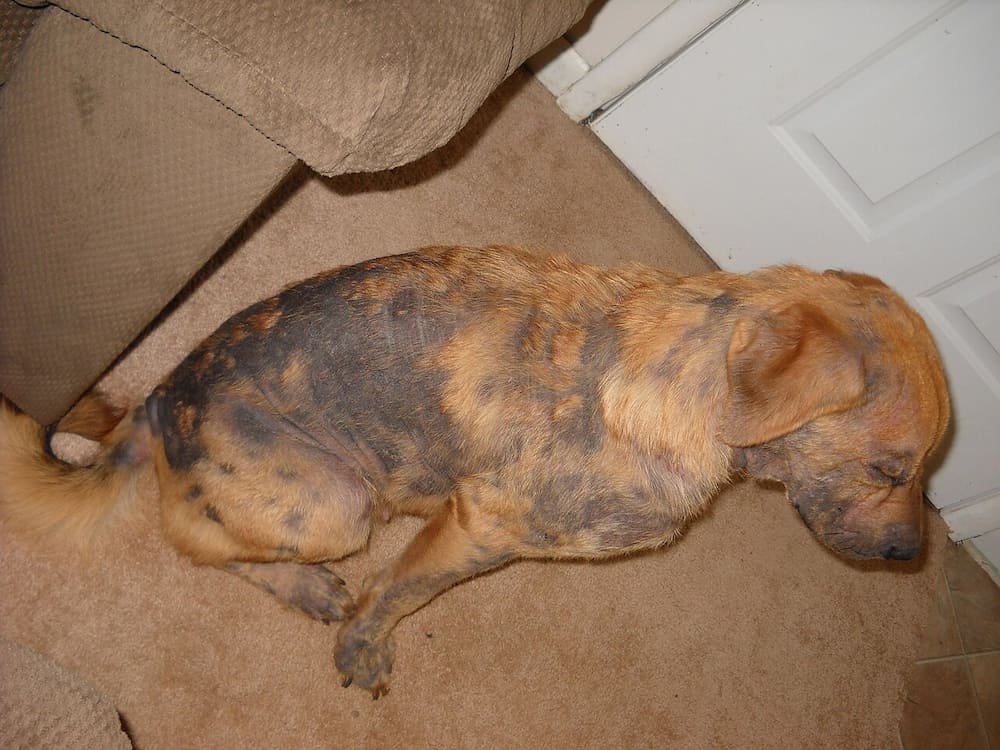
This is where the immune-system connection becomes important. Generalized demodicosis, particularly when it develops in an adult dog, can sometimes be associated with an underlying illness or immune suppression.
That doesn’t mean a dog with demodectic mange automatically has another disease. But when it appears suddenly in an adult, your vet may want to investigate whether there’s something else going on behind the scenes.
Cheyletiella Mange (Walking Dandruff)
Cheyletiella is often called “walking dandruff” because these tiny mites live on the surface of the skin and their movement through flakes and skin debris can make the “dandruff” appear to move.
In dogs, the usual culprit is Cheyletiella yasguri. Unlike demodectic mange, Cheyletiella is contagious and can spread through direct contact, particularly where several animals live together.
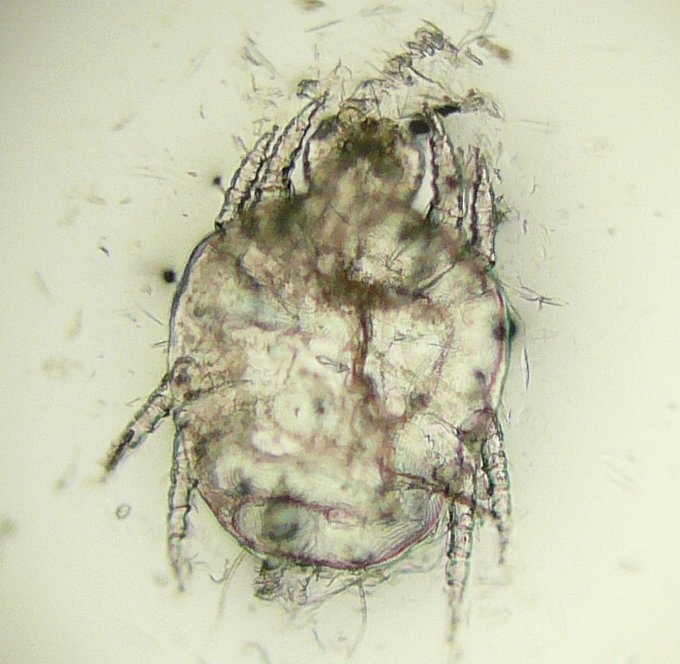
Cheyletiella mite collected from a dog. Photo: Joelmills, CC BY-SA 3.0, via Wikimedia Commons.
Signs of Walking Dandruff
The most obvious sign is usually heavy scaling or dandruff, particularly along the dog’s back. You may also notice:
- Flaky or scaly skin
- Itching, which can range from mild to severe
- Excessive scratching or grooming
- Irritated skin
- Large amounts of dandruff along the back
Here’s the slightly sneaky part: some dogs can carry Cheyletiella without showing obvious symptoms, so an apparently healthy animal can still help spread the mites.
Can Walking Dandruff Spread to People?
Yes. Cheyletiella mites can temporarily infest people and may cause an itchy skin reaction. They can also spread between pets, so if one animal in a multi-pet household is diagnosed, your vet may recommend treating animals that have been in contact with them as well as dealing with mites in the environment.
How Do Vets Diagnose Mange in Dogs?
Mange can look a lot like other skin problems, so itching, redness or bald patches aren’t enough to tell you which type of mange your dog has — or whether mange is the problem at all.
Your vet will start by examining your dog’s skin and asking a few questions: When did it start? How itchy is your dog? Are any of your other pets scratching too? Has anyone in the household developed an unexplained itchy rash?
Skin Scrapings and Other Tests
Skin scrapings are one of the main ways vets look for mites. A small sample of skin material is collected and examined under a microscope. The type of sample needed depends partly on which mite is suspected.
For example, Demodex mites live down in the hair follicles, so deep skin scrapings or sometimes hair samples can reveal the mites. Cheyletiella lives on the skin’s surface, so vets may instead use superficial scrapings, clear adhesive tape or flea combing to collect mites and eggs.
What If the Vet Can't Find Any Mites?
Here’s where sarcoptic mange can be frustrating: a negative skin scraping doesn’t necessarily rule it out.
Sarcoptes mites can be difficult to find, even when the dog’s symptoms strongly suggest scabies. Your vet may take several samples and consider your dog’s symptoms, history and possible exposure. In some cases, response to appropriate treatment also helps support the diagnosis.
If adult-onset generalized demodicosis is diagnosed, your vet may also recommend tests for an underlying condition that could be affecting the immune system.
How Is Mange in Dogs Treated?
There’s no one-size-fits-all treatment for mange. What works best depends on the mite involved, how badly your dog’s skin is affected, their age and general health, and whether a secondary infection has joined the party.
The good news is that effective veterinary treatments are available. Once your vet knows—or strongly suspects—which type of mange they’re dealing with, they can choose an appropriate treatment plan.
Treating Sarcoptic Mange
Sarcoptic mange requires treatment to kill the mites. Your vet may prescribe a topical or oral antiparasitic medication, with the choice depending on your dog and the products approved or available where you live.
Because sarcoptic mange is contagious, other dogs that have been in contact with an affected dog may need treatment too. Bedding and other items that could have been contaminated may also need attention to reduce the chance of reinfestation.
Treating Demodectic Mange
Treatment depends partly on whether the disease is localized or generalized.
Small, localized patches in young dogs often resolve without specific treatment, although your vet may want to monitor them. Generalized demodicosis is different and usually requires veterinary treatment, sometimes for several months.
Modern antiparasitic medications, including drugs in the isoxazoline family, are now widely used for generalized demodicosis. Your vet will decide which medication is appropriate and how long treatment should continue.
If a bacterial skin infection has developed alongside the mange, that may need treating as well. Adult dogs with generalized demodicosis may also need investigation for an underlying condition affecting their immune system.
Treating Cheyletiella
Because walking dandruff is contagious, treatment isn’t necessarily limited to the dog showing symptoms. Other pets in the household may also need treatment, and your vet may recommend cleaning bedding and other parts of the environment to help prevent reinfestation.
Don’t reach for an old mange treatment without veterinary advice.
The right medication depends on the mite involved and the individual dog. Some older mange drugs can cause serious side effects in susceptible dogs, while newer treatment options may be safer and easier to use. Your vet can recommend the appropriate treatment for your dog.
Can You Treat Mange at Home?
I completely understand the temptation to reach for a home remedy when your dog is itchy and uncomfortable — especially when the internet is full of supposed mange “cures.”
The problem is that not every itchy, balding dog has mange — and the different types of mange don’t all need the same treatment.
Home remedies such as oils, herbal preparations or supplements haven’t been shown to reliably eliminate the mites responsible for mange. And while soothing irritated skin may make a dog more comfortable, that isn’t the same as treating the underlying infestation.
There’s another reason I’d get your vet involved before experimenting at home: scratching can damage the skin enough for secondary bacterial or yeast infections to develop, which may need treatment of their own.
What Can You Do at Home?
Once your dog has been examined, there are plenty of useful things you can do alongside the treatment your vet recommends:
- Give prescribed treatments exactly as directed and complete the course.
- Stop your dog mixing with other animals if your vet suspects a contagious type of mange.
- Follow your vet’s advice about treating other pets in the household.
- Wash or clean bedding and other potentially contaminated items when advised.
- Keep an eye on the skin and let your vet know if the itching, redness, sores or hair loss are getting worse.
For contagious mites, management can involve the affected animal, animals they’ve been in contact with and, depending on the mite, environmental control.
What about “natural” mange remedies?
Natural doesn’t automatically mean harmless—or effective. Before putting essential oils, herbal preparations or homemade mixtures on sore or broken skin, check with your vet. The safest home care is the kind that supports, rather than replaces, an effective treatment plan.
How Long Does It Take for a Dog to Recover From Mange?
Recovery depends on the type of mange, how extensive it is and whether your dog has developed a secondary skin infection or has another health problem that also needs attention.
The itching may start improving before the skin and coat look normal again. Hair takes time to grow back, so don’t be discouraged if those bald patches hang around for a while after treatment has started.
More extensive cases can take weeks or sometimes months to resolve, and your vet may want to recheck your dog or repeat skin tests before deciding treatment is complete.
If your dog’s skin is getting worse rather than better, new areas of hair loss are appearing, or you notice increasing redness, swelling, discharge, odor or soreness, get back in touch with your vet rather than simply giving the treatment more time.
When Should You Call the Vet?
If you think your dog might have mange, it’s worth making a veterinary appointment rather than waiting to see whether it clears up on its own. Mange isn’t the only cause of itching and hair loss, and knowing what’s actually causing the problem means your dog can get the right treatment sooner.
Don’t wait if your dog is extremely itchy or uncomfortable, the affected areas are spreading quickly, or the skin has become very red, sore, crusted or broken. Discharge, swelling or an unpleasant smell can also be signs that a secondary skin infection has developed.
And if you suspect sarcoptic mange, mention that when you make the appointment. Because it’s contagious, the clinic may want to take precautions and can advise you about other dogs your dog has been in contact with.
The Bottom Line on Dog Mange
Mange can look pretty alarming — and for your dog, it can be downright miserable. But once you know which mite you’re dealing with, there are effective treatments available and most dogs can get back to feeling much more like themselves.
The important thing is not to try to diagnose the problem from bald patches and scratching alone. Get your vet involved, follow the treatment plan, and give that poor skin and coat a little time to recover.
And hopefully, those microscopic little freeloaders will soon be history.